
Forklift Classifications
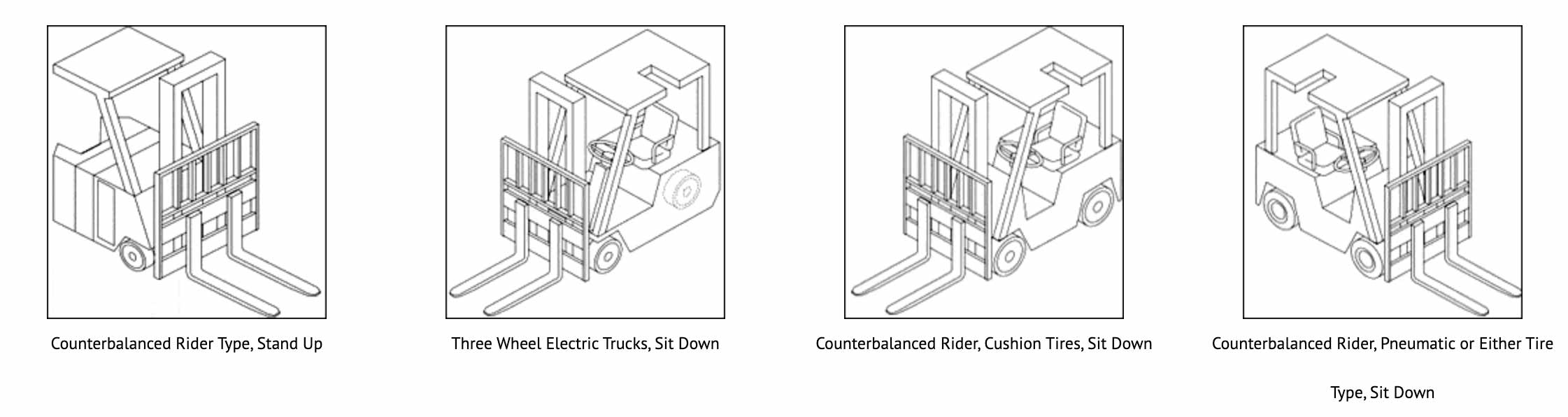
CLASS 1: ELECTRIC MOTOR RIDER TRUCKS
These forklifts can be equipped with either cushion or pneumatic tires. The cushion-tired lift trucks are intended for indoor use on smooth floors. The pneumatic-tired models can be used in dry, outdoor applications.
These vehicles are powered by industrial batteries and use transistor motor controllers to control travel and hoist functions. They are very versatile and are found from the loading dock to the storage facility. They are generally used in applications where air quality needs to be considered.
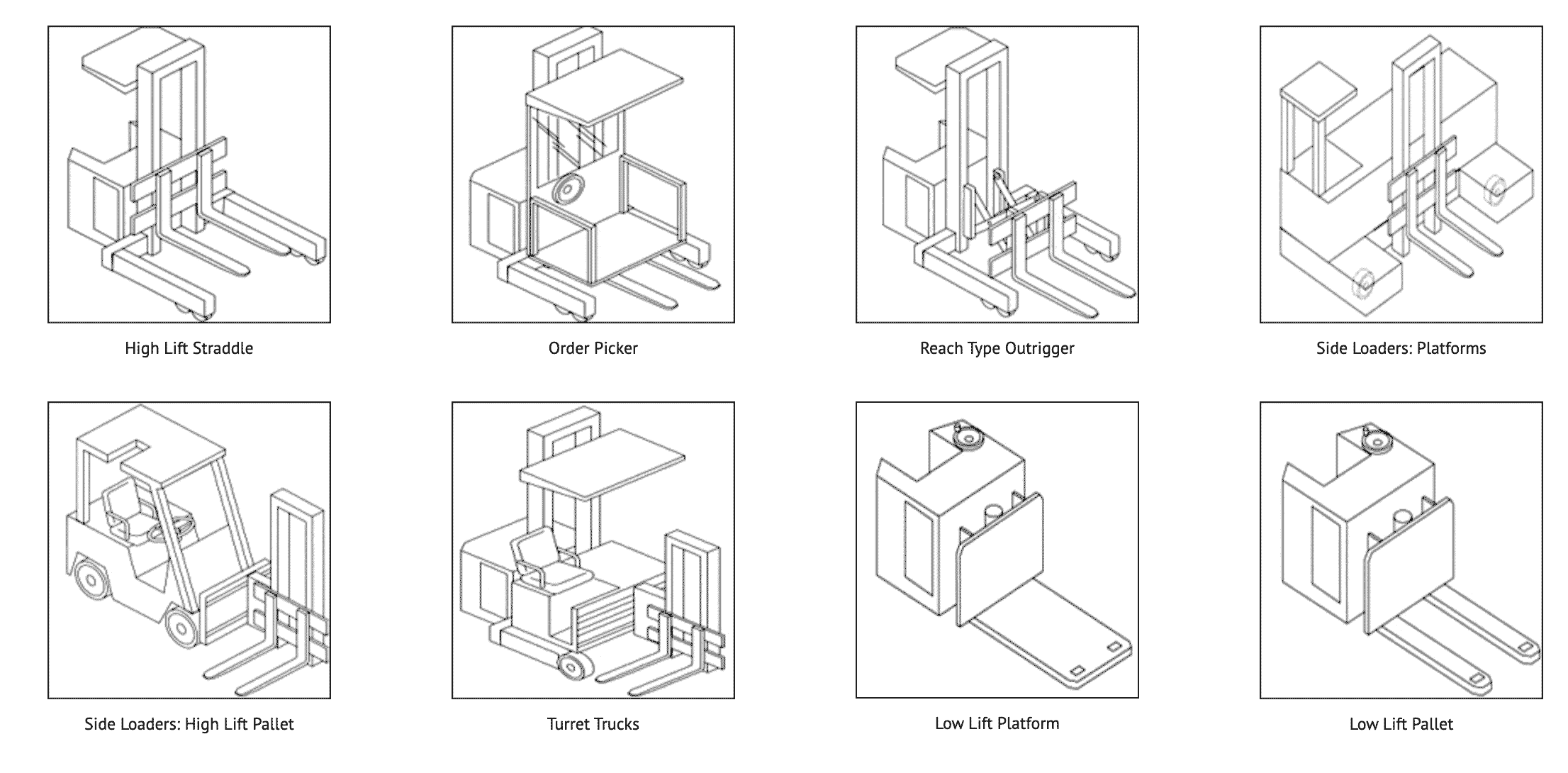
CLASS 2: ELECTRIC MOTOR NARROW AISLE TRUCKS
This forklift is for companies that opt for very narrow aisle operation. This allows them to maximize the use of storage space. These vehicles have unique features that are designed to minimize the space occupied by the truck and to improve speed and efficiency.
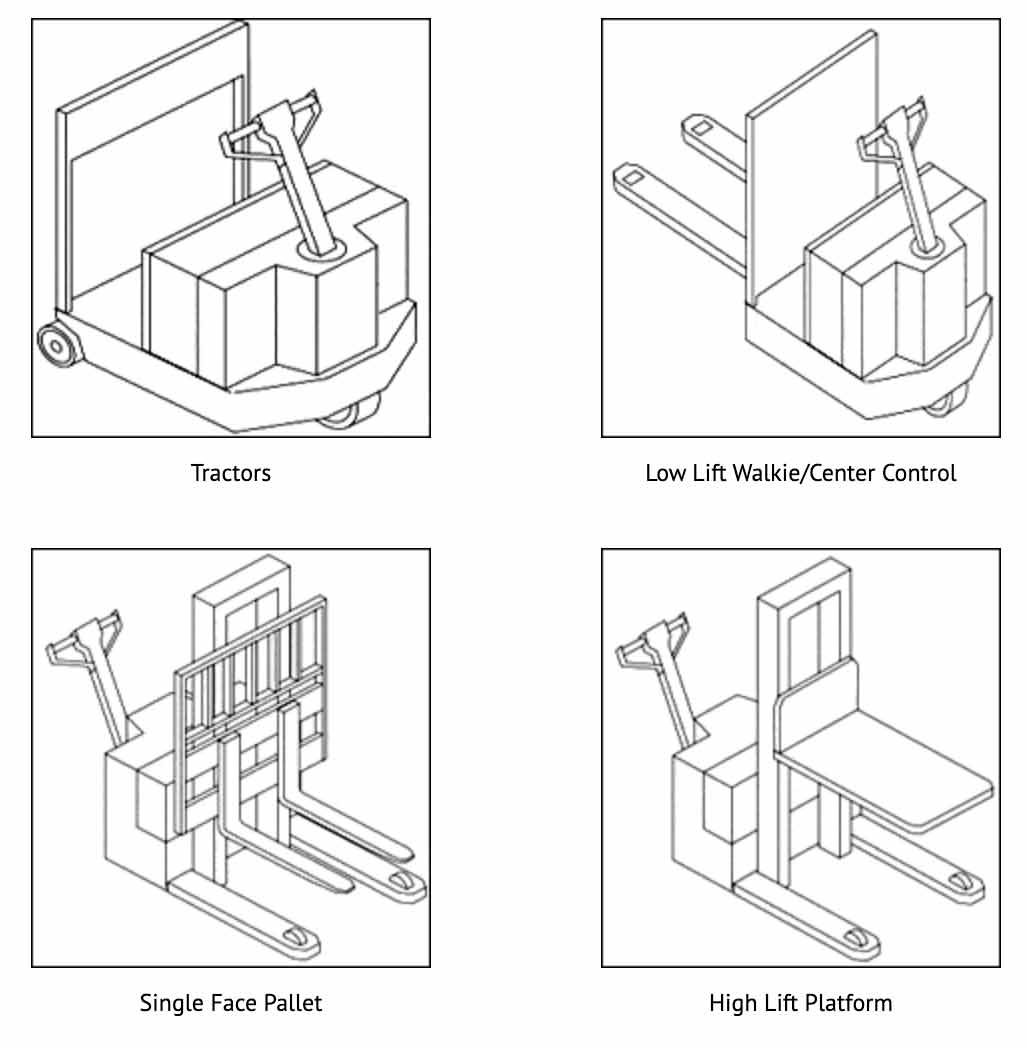
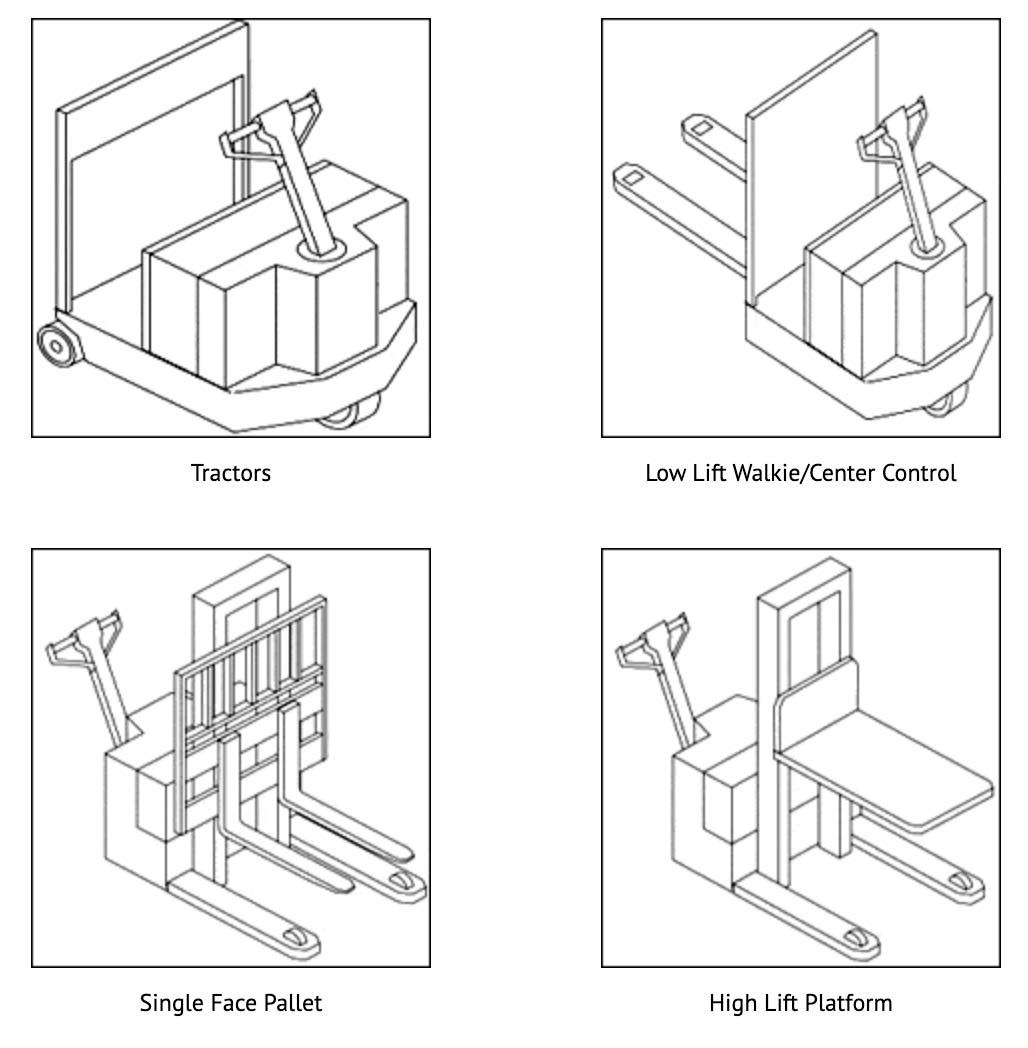
CLASS 3: ELECTRIC MOTOR HAND OR HAND-RIDER TRUCKS
These are hand-controlled forklifts, meaning the operator is in front of the truck and controls the lift through a steering tiller. All controls are mounted on the top of the tiller, and the operator moves the tiller from side to side to steer the truck. These vehicles are battery-powered, and the smaller capacity units use industrial batteries.
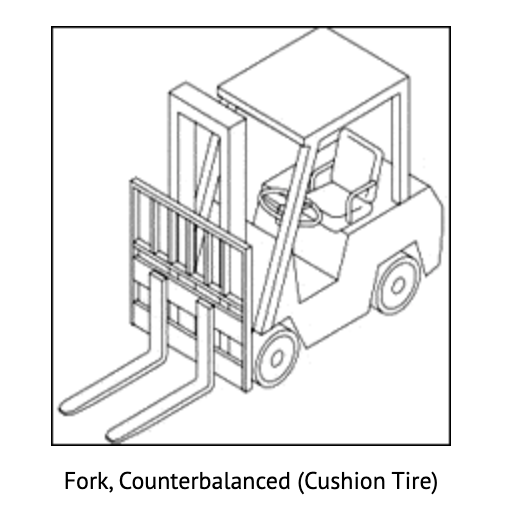
CLASS 4: INTERNAL COMBUSTION ENGINE TRUCKS – CUSHION TIRES
These forklifts are used inside on smooth dry floors for transporting palletized loads to and from the loading dock and the storage area. The cushion-tired forklifts are lower to the ground than forklift trucks with pneumatic tires. Because of that, these forklift trucks can be useful in low-clearance applications.
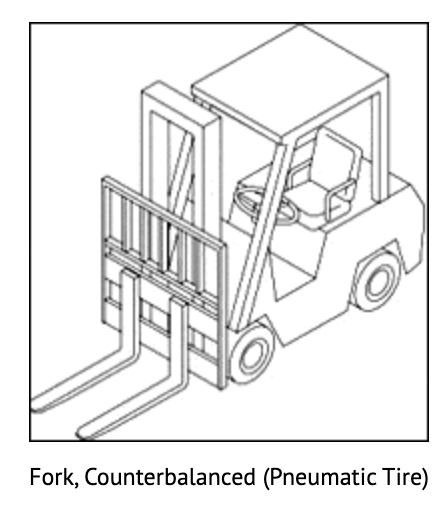
CLASS 5: INTERNAL COMBUSTION ENGINE TRUCKS – PNEUMATIC TIRES
These trucks are most commonly seen in warehouses. They can be used either inside or outside for virtually any type of application. Because of the large capacity range of this series of lift truck, they can be found handling small single pallet loads to loaded 40-foot containers.
These lift trucks can be powered by internal combustion engines and are available for use with LPG, gasoline, diesel, and compressed natural gas fuel systems.
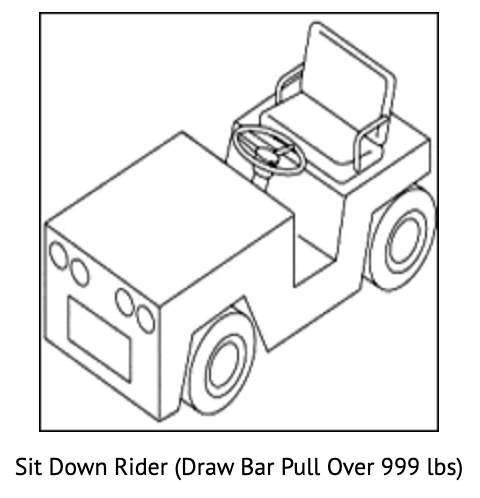
CLASS 6: ELECTRIC OR INTERNAL COMBUSTION ENGINE TRACTORS
These vehicles are versatile and can be used in a variety of applications. They can be equipped with either internal combustion engines for outdoor use or battery-powered electric motors for indoor use.
CLASS 7: ROUGH TERRAIN FORKLIFT TRUCKS
Rough terrain forklifts are fitted with large floatation tires for outdoor use on difficult surfaces. They are often used at construction sites to transport and lift building materials to various job site locations. They are also common with lumber yards and auto recyclers.