Warehouse Storage Solutions: How to Choose the Right Mix for Space, Speed, and Safety
Effective storage is the foundation of any well-run warehouse.
Storage design decides how far people walk, how fast orders ship, and how safely teams work, which can have a major impact on productivity, efficiency, and customer service.
“Warehouse storage isn’t just putting things in boxes or simply organizing products,” says Jack Gerhardt, VP of Engineered Solutions at Burwell Material Handling. “It’s turning previously unused space into capacity in order to shorten travel time and cut unnecessary touches in the process. You have to design storage around your inventory’s behavior.”
Let’s take a look at the different kinds of warehouse storage solutions available, their benefits, and how to pick the right one using data on access, density, and speed.
Storage Solution Types
There are several key storage solutions that warehouses leverage to maximize their use of space and streamline operations:
- Pallet Racking: Pallet racking is the most common and versatile storage solution. It allows you to efficiently stack and store large volumes of palletized inventory. Different pallet rack designs, like selective, drive-in, or push-back racking, offer various storage density and accessibility options.
- Shelving: For storing smaller, individual items, shelving systems are an essential solution. Warehouse shelving comes in a variety of materials, sizes, and configurations to accommodate the unique needs of the products being stored.
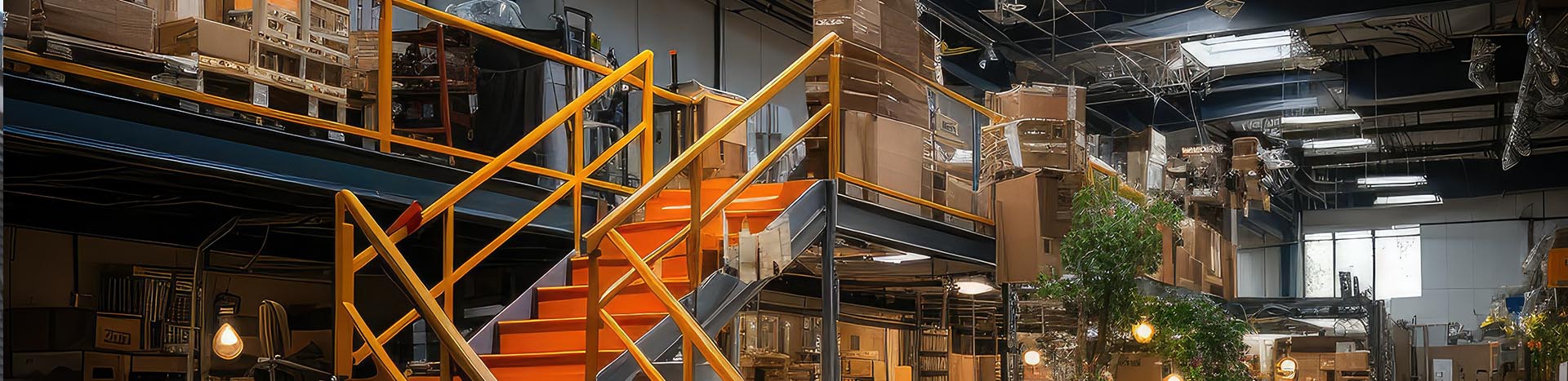
- Mezzanines: Mezzanines are multi-level platforms that allow you to utilize the vertical space in your warehouse. This lets you increase your overall storage capacity without expanding the physical footprint of the facility.
- Vertical Lift Modules (VLMs): VLMs are automated, enclosed vertical storage units that bring inventory to the operator, increasing productivity and reducing travel time. They’re ideal for high-density storage of small parts and components.
- Automated Storage and Retrieval Systems (AS/RS): AS/RS are advanced, computer-controlled storage systems that automatically deposit and retrieve inventory using cranes or robots. They maximize storage density and throughput in high-volume warehouses.
- Carousels: Horizontal and vertical carousel storage systems rotate stored items to the picking station, speeding up order fulfillment. Carousels are a popular solution for parts, tools, and other small items.
Comparison Guide: Warehouse Storage Solutions
| Solution | Access / Selectivity | Density | Speed / Throughput | Flexibility | Best for |
| Selective Pallet Rack | Direct access to every pallet | Low–Medium | Medium (driver-limited) | High (easy re-slot) | Wide SKU variety, shallow depth/SKU |
| Double-Deep Selective | 2-deep access (requires reach) | Medium | Medium | Medium | Moderate SKU variety with some depth |
| Push-Back Rack | LIFO by lane | High | Medium-High | Medium | Few high-volume SKUs with lane depth |
| Drive-In / Drive-Through | LIFO/FIFO by bay; low selectivity | Very High | High (when lanes stay full) | Low | Very high volumes of few SKUs |
| Shelving (Bin / Static) | Item-level access | Low | Medium (picker-limited) | High | Small parts, varied SKUs |
| Carton Flow (Gravity) | Item-level, first-in first-out | Medium | High at pick face | Medium | A‑items with high lines/hour |
| Mezzanine | Depends on deck storage | Adds cubic capacity | Process‑dependent | High (modular growth) | Staging, kitting, reserve storage |
| VLM / Vertical Carousel | Software-directed, goods-to-person | High | High (for small parts) | Medium | High accuracy/security small parts |
| AS/RS (Unit/Case/Tote) | Software-directed, goods-to-person | Very High | Very High | Low–Medium (by design) | High volume, repeatable SKUs |
How to Right‑Size Your Facility
The right storage solutions for your warehouse will depend on the unique characteristics of your inventory, the volume and velocity of your operations, and your overall warehouse design and layout.
“Before picking a storage solution, make sure you fix the slotting, flow, and replenish first,” Gerhardt says. “Then add solutions that complement that optimized flow.”
Evaluating your current and future storage needs, and then selecting the optimal mix of storage solutions, is a critical step in optimizing your warehouse performance and throughput. Consider:
- Pulling 90 days of order lines to identify A/B/C velocity and cube by family.
- Map current travel paths and dwell points, then tag the top five congestion spots.
- Model two or three storage scenarios against lines/hour, travel feet, and peak buffers.
- Pilot one change in the busiest zone and measure the before and after.
Q&A: Warehouse Storage
What’s the fastest win for most warehouses?
Re‑slot A‑items to the golden zone and near shipping, then add carton flow where lines/hour are the highest.
When do VLMs beat shelving?
When accuracy, security, and space density matter and your SKU velocity supports goods‑to‑person workflows.
Is AS/RS overkill for mid‑size sites?
Not always. Start with a single aisle or micro‑AS/RS in the highest‑volume family and expand if ROI proves out.
What are some safety tips when it comes to warehouse storage?
Consider rack protection and posted capacities. Inspect anchors and upright damage on a regular cadence. Design pick heights and reaches to reduce strain, and reserve low/high picks for slow movers.
Next Steps
Need a quick plan? We can analyze your velocity and space, then recommend a storage mix that boosts lines/hour and leaves room to grow. Contact our team today.