Telematics for Mixed Forklift Fleets: What to Track to Prevent Incidents and Downtime
If you manage 20+ trucks across multiple brands, you already know the reality: Mixed fleets are normal.
The challenge often comes from trying to manage them like they’re not.
Jeff Buyck, CTO for Burwell Enterprises, says one of the most common headaches of managing a mixed forklift fleet comes from fragmentation among telematics systems.
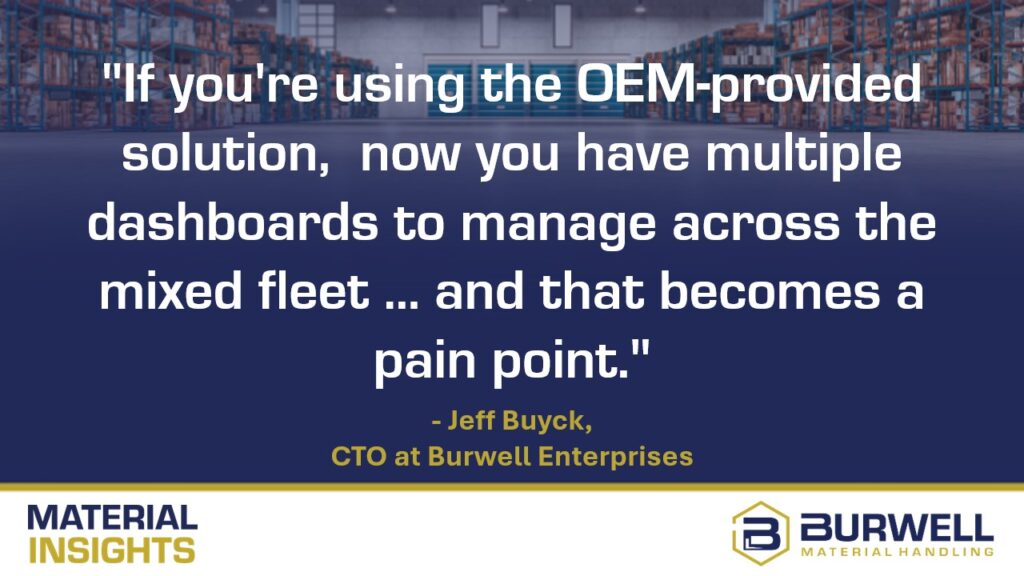
“If you’re using the OEM-provided solution, now you have multiple dashboards to manage across the mixed fleet,” Buyck says “And that becomes a pain point — managing all of those dashboards.”
Each dashboard provides its own reporting on the OEM’s units, requiring fleet managers to monitor them separately, as information is flowing simultaneously.
While you can implement telematics solutions that aggregate your mixed fleet’s telematics reporting across brands, Buyck says the goal shouldn’t be to track everything.
Instead, Buyck says mixed forklift fleets should focus on tracking key signals that aim to prevent incidents and reduce downtime — and then build a consistent weekly rhythm around them.
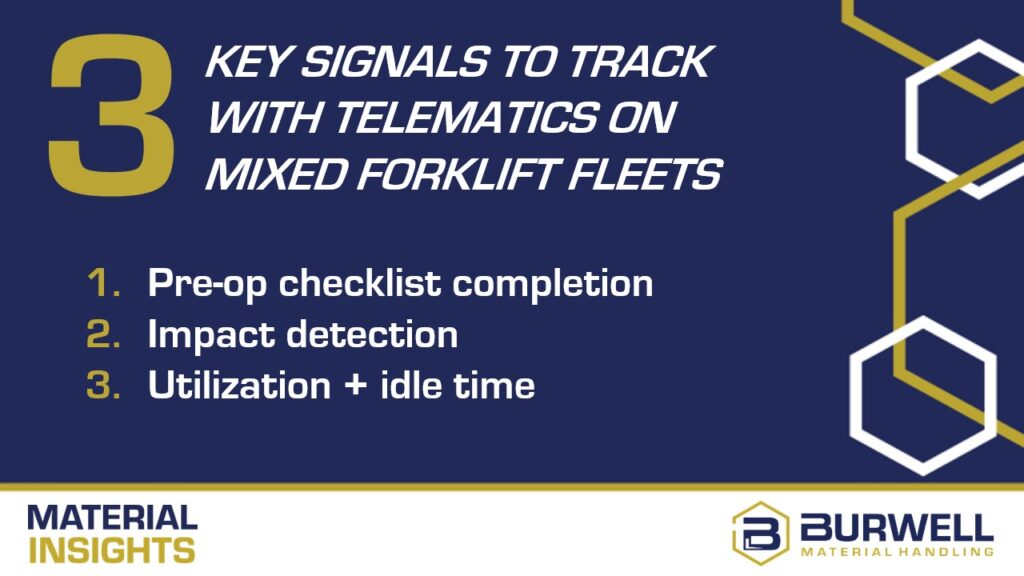
3 key signals to track with telematics on mixed forklift fleets:
1) Pre-op checklist completion
Fleets should already be using a pre-op checklist for OSHA compliance. The problem is how it’s managed. When the process is paper-based, it creates admin work and delays, and it’s hard to see patterns across a fleet.
Buyck says he heard from one fleet manager who was coming in on the weekends on his own time just to process their pre-op checklist forms. Not only is that cumbersome and overwhelming, but it also creates a delay in important information flowing back to those who need it.
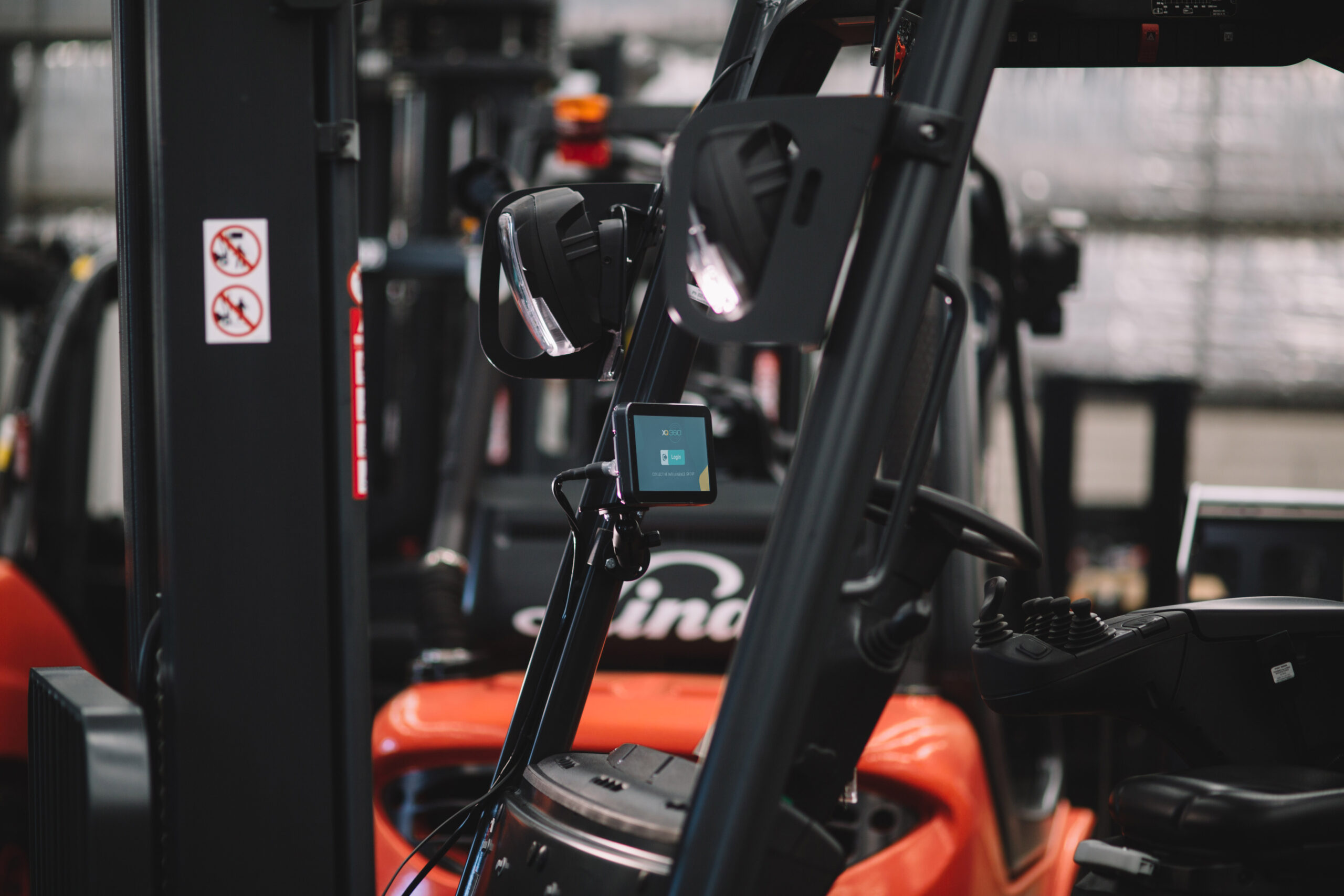
Digitizing checklists helps reduce that burden and gives fleet managers real-time visibility into what’s actually happening. It also can reduce “pencil whipping,” where operators just quickly check the boxes without thought in order to complete the task, by randomizing the order of criteria operators need to evaluate, Buyck says.
What to track:
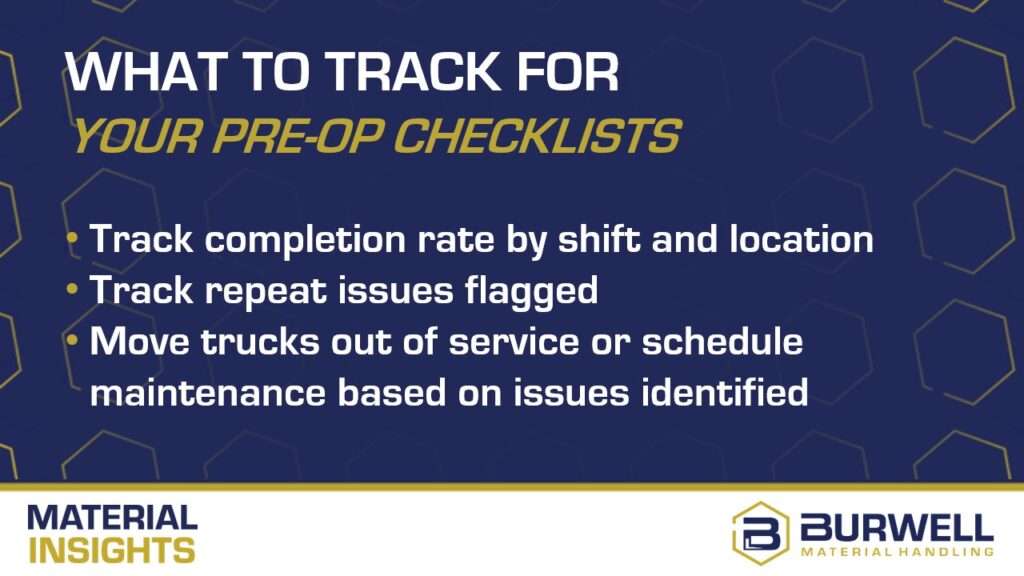
- Track completion rate by shift and location
- Track repeat issues flagged
- Move trucks out of service or schedule maintenance based on issues identified
2) Impact detection
Impact detection within telematics solutions is one of the most useful signals because it ties damage to time and operator login and alerts you to investigate whether repairs are needed for racking or equipment. That helps you stop guessing and start fixing patterns.
“Do you ever have a truck come back at the end of the day with a big scrape in the paint and nobody knows how it got there?” Buyck says.
Impact detection gives traceability: what happened, when, and who was logged as the operator. In addition, when impacts cluster in the same zones, it often points to layout issues, congestion, visibility, or traffic flow problems that your material handling operation may need to correct.
What to track:
- Impact count by zone: Where it keeps happening
- Repeat impacts on the same units: Is it operator behavior or layout?
- Severity thresholds: What requires further review
3) Utilization + idle time
Forklift downtime is not always about maintenance and repairs; it’s about under-utilized equipment. It’s wasted hours, poor allocation, and trucks sitting too long in the wrong places.
“Just knowing where trucks are at and if they’re sitting for too long, all these things start to tie in with each other,” Buyck says. “With telematics, you can get utilization by department or by zone in a facility.”
He says closely monitoring idle time is especially important if you’re leasing.
“Many of these customers have units on lease programs,” Buyck says. “So managing hours across the fleet utilization is important so they don’t have to pay overages.”
What to track:
- Identify overused and underused trucks to balance hours
- Find idle hot spots and root causes (process, congestion, waiting)
- Use utilization by department/zone to reduce “truck stealing” among departments and improve allocation
The operating rhythm that makes telematics usable for mixed forklift fleets
Telematics fails when it becomes “another report” instead of a weekly decision tool.
Buyck says the goal should be about keeping it simple, focused, and clear, and he encourages operations to look for a vendor that can partner with you to achieve that so you can stay focused on taking action with the data.
“We primarily work with the fleet manager,” he says. “Typically, it’s anywhere from weekly reports to the fleet manager and then monthly to quarterly reports up to leadership.”
For fleet managers looking to get the most out of their telematics for mixed forklift fleets, a simple weekly workflow could look like this:
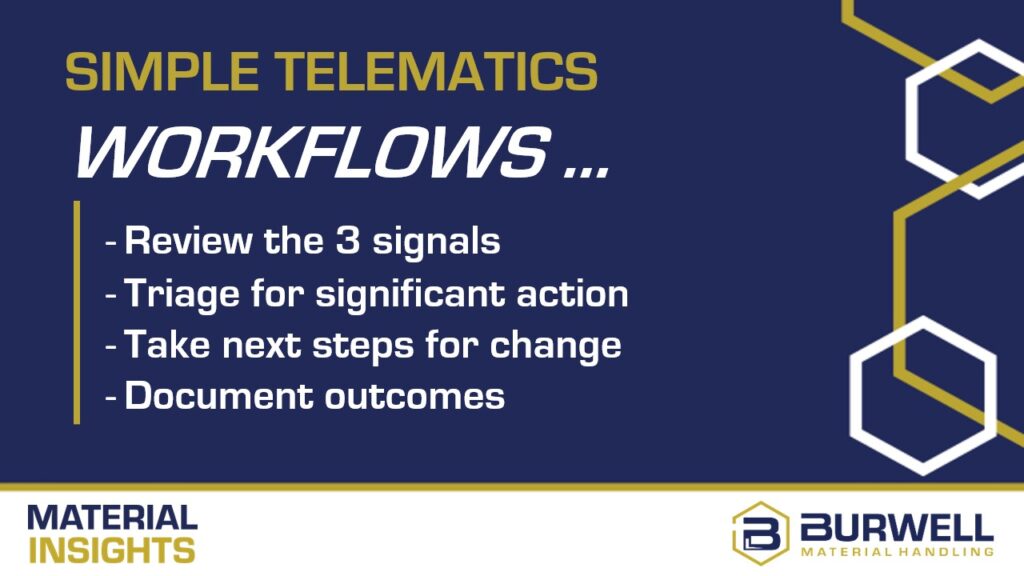
- Review the three signals
- Triage the most significant items for immediate action (taking units out of service, maintenance, or operator training)
- Take next steps for coaching, zone change, or a process fix
- Document outcomes for month-end reporting
Next step
If you’re running a mixed forklift fleet and need help with tracking the most important signals with telematics, connect with an expert from the Burwell Connect & Protect team today.