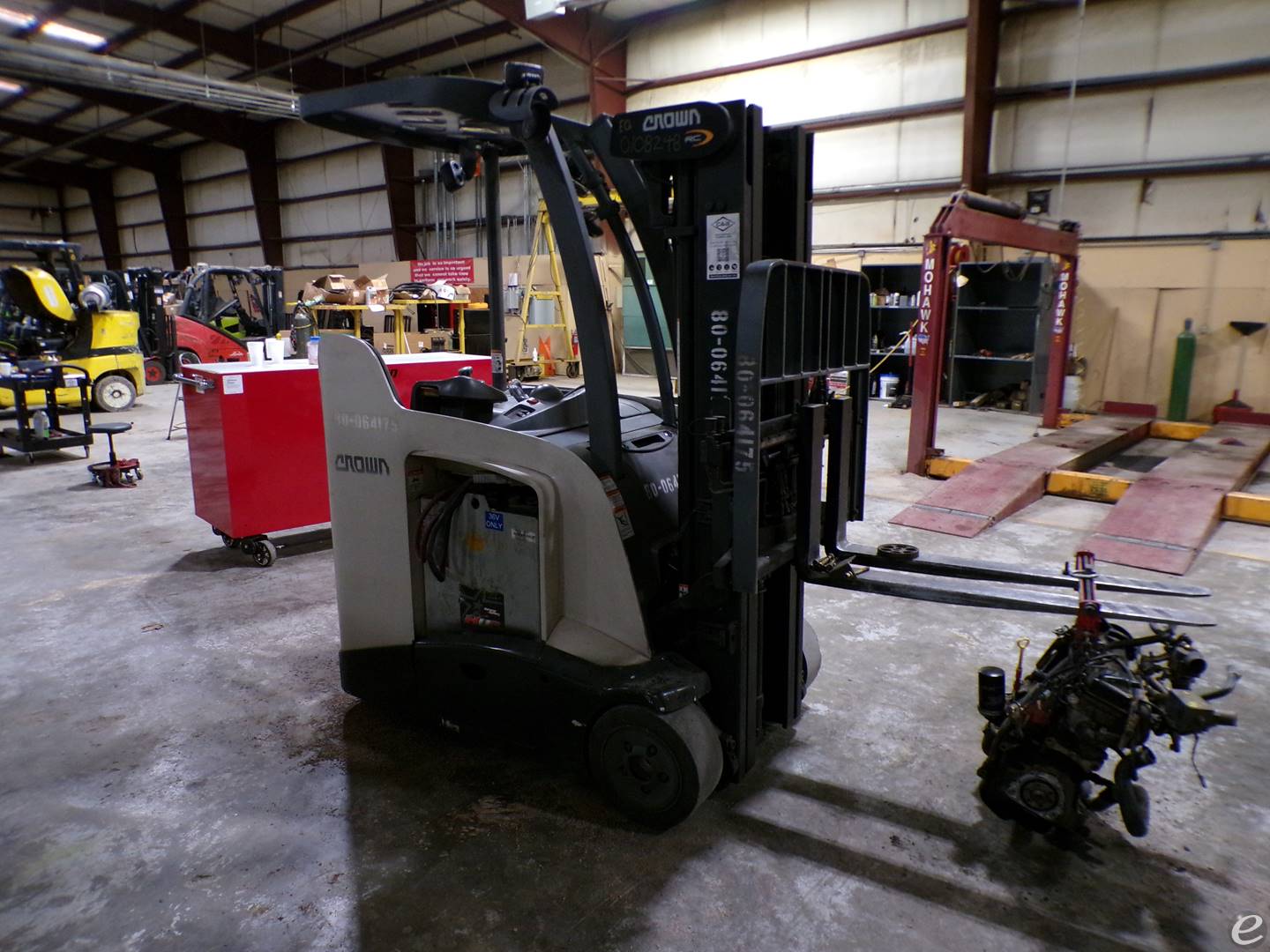
Forklift Down? What to Do Before You Call for Service
When a forklift goes down, the first question is usually, “How fast can someone get here?”
That matters. But the better first step is service triage: make the situation safe, understand how serious the issue is, and gather the details that help your service partner dispatch the right technician with the right information.
“The first question I’m usually asking is what’s going on with the truck?” says Lindsey Coffman, district service manager for Burwell Material Handling.
The more specific you can be up front, the faster the service team can understand the issue and determine what kind of support is needed.
Start with what happened and how serious it is
A forklift issue can fall into a few different levels of urgency. Coffman says she typically thinks through severity in three ways: whether it is safety critical, production critical, or operationally inconvenient.
A safety-critical issue is anything that could put someone at risk. That could be a leak, a horn that is not working, a brake or steering concern, an attachment issue, or anything tied to a safety component.
“Is it something that is immediately putting someone in your organization at risk or it is a safety hazard?” Coffman says.
A production-critical issue is one that stops or seriously limits the work.
“Production-critical is whether it is stopping their production completely for whatever reason or it is hindering them from being able to do whatever their job is,” she says.
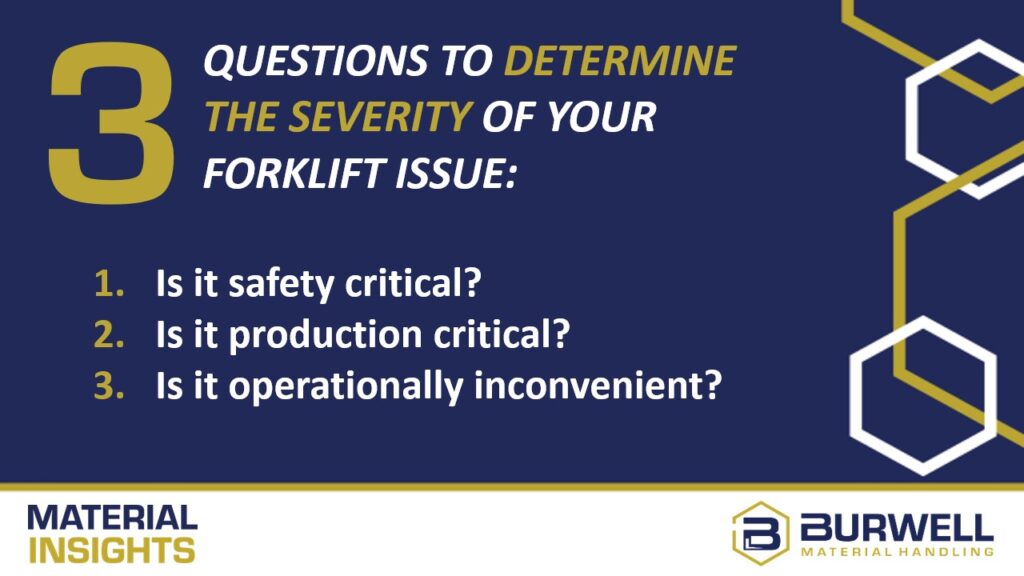
Then there are issues that need attention but may not stop production immediately. The forklift may be hard to start but still running. It may have an intermittent error code or something unusual that should be checked.
Coffman describes those as “operationally inconvenient” issues.
“It’s something that is not safety related, it’s not downing our production, but it needs attention outside of just like a regular maintenance situation,” she says.
That distinction helps determine whether the call needs immediate attention, scheduled repair, or further monitoring.
Have the right information ready
As the customer, you can help the process move faster by having the right details ready before calling for service.
At minimum, be prepared to share:
- the make, model, and serial number
- the equipment type
- what happened and when it started
- any error codes
- whether it is leaking, and where
- whether an attachment is involved
- whether the truck is down, partially usable, or unsafe to operate
- where the truck is located in the facility
“Understanding the type of equipment helps us know how to dispatch the right technician the first time,” Coffman says.
A 60-ft. boom lift may require a different technician than a standard 5,000-lb. forklift. A hydraulic leak on an attachment may require different preparation than an error code on an electric unit.
Specific symptoms also help the technician prepare. If the customer can say a hose appears ruptured near the mast, the service team may be able to plan for hose repair. If a horn is not working, knowing the make and model may help the technician bring the right part and correct a safety issue in one visit.
Don’t assume it needs to go to the shop
When a truck is down, some customers may assume it needs to be hauled to a branch or shop. But in most cases, the first step is an on-site service call.
“We will always go out there first,” Coffman says.
That’s because the issue may be something that can be diagnosed or repaired on site.
If the technician determines the repair is more involved or needs shop support, that recommendation can be made after the initial diagnosis.
Think about production coverage early
A down forklift can create a second question quickly: How will the work continue if this unit is down longer than expected?
That conversation should happen during the triage process, not after you have already lost a day of production.
If parts need to be ordered, if a repair may take several days, or if the unit needs to come back to the shop, rental coverage may help bridge the gap.
“How long can you afford to be down while we’re waiting on parts to come in or whatever the case is before you would need a rental to replace that?” Coffman says.
Confirm access details before the technician arrives
The best triage call can still lose time if the technician arrives and cannot access the site, find the right contact, or meet facility requirements.
Coffman says the service team also verifies basic site details.
“We always ask them to verify the contact on site,” she says. “It may be different than the person that’s calling in the service request.”
You should also be ready to share hours of operation, service windows, gate instructions, or any time periods when a technician should not be on site.
For newer customers, site requirements are especially important.
“Do you have PPE requirements that our technicians have to have when they’re on site?” Coffman says. “Is there any additional safety training that’s required for us to be there?”
What to have ready before you call
When a forklift goes down, gather the basics first:
- Make/model/serial number
- Equipment type
- Error code or symptom
- Whether it is leaking
- Whether an attachment is involved
- Whether the issue is safety critical or production critical
- Where the truck is located
- Who the on-site contact is
- What site access requirements apply
- Whether rental coverage may be needed if the truck cannot be repaired quickly
Good triage helps get the right support moving faster.
Next step
If your forklift goes down, make the situation safe, gather the key details, and contact your Burwell Material Handling service team for support.