
When Does Forklift Usage or Application Call for More Frequent PMs?
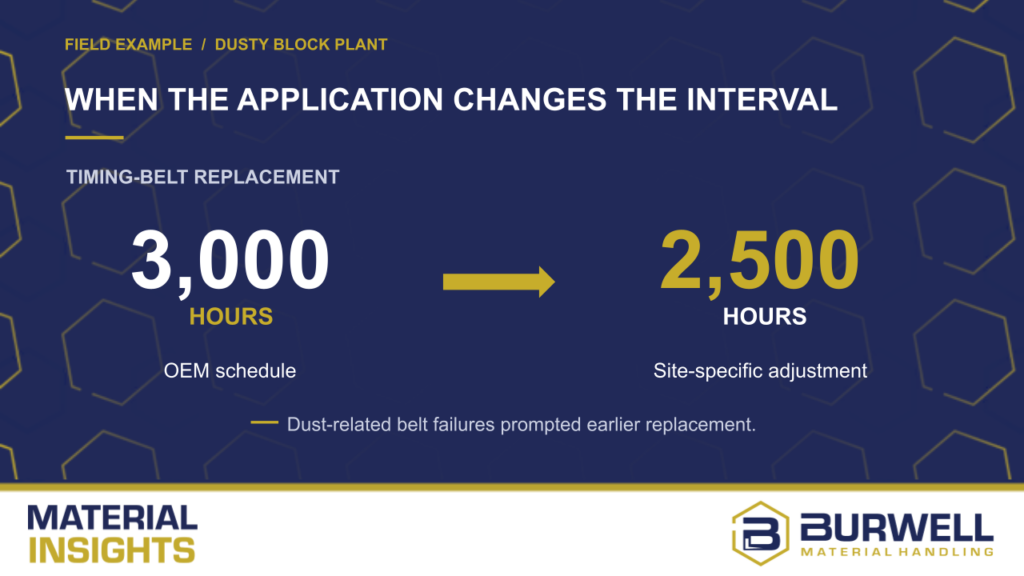
A typical forklift manufacturer’s maintenance schedule calls for timing belt replacements at 3,000 operating hours.
But sometimes, there are circumstances based on usage or environment that can warrant a change in those intervals.
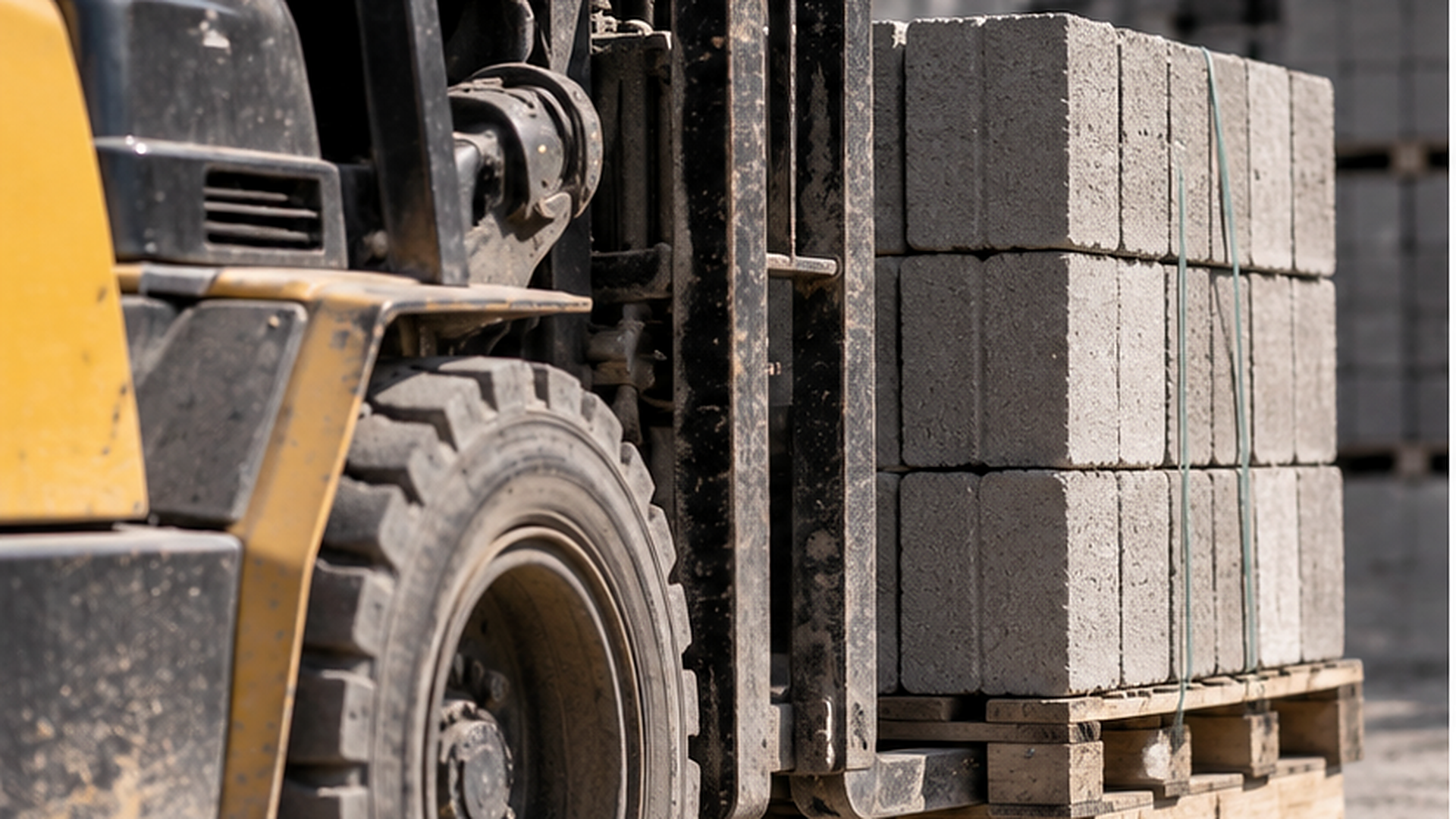
For example, Tony Jennings, technical training manager at Burwell Material Handling, says at a block manufacturing facility, technicians were seeing timing belt failures prior to 3,000 hours, due to an increase in dust particulates. In that case, the service team recommended shifting the belt replacement earlier to 2,500 hours to address the conditions the trucks were operating in.
That’s one example of how a forklift’s actual application and service history can influence its maintenance needs.
“Typically, we drive PMs by the hour meter, and the OEM sets the maintenance schedule,” Jennings says. “But in certain applications, environments, or usage scenarios, we may need to adjust that schedule.”
For fleet managers, understanding when that adjustment may be necessary starts with looking at how and where the equipment is being used, as well as what its maintenance history reveals.
Why is the OEM maintenance schedule the starting point?
Every forklift has OEM-recommended maintenance intervals and procedures based on its design and operating requirements. These schedules generally specify when particular inspections, fluid changes, adjustments, and component replacements should occur.
Jennings says technicians should always consult the equipment’s operator and maintenance manuals first when planning service.
Following the prescribed maintenance schedule is important for equipment reliability, safe operation, and maintaining the documentation needed for warranty claims.
But the manual may also identify conditions that warrant additional maintenance.
Dust, extreme temperatures, heavy-duty applications, and other demanding environments can accelerate wear or create maintenance needs beyond those expected under normal operating conditions.
What operating conditions signal the need for more frequent attention?
Certain applications create recognizable wear patterns that experienced technicians should flag to investigate further, such as a facility where airborne material was repeatedly clogging forklift radiators. By the time technicians returned for the next scheduled PM, the trucks were already experiencing overheating problems, Jennings says.
The service team worked with the facility to establish a more frequent radiator-cleaning routine between PM visits.
“In certain situations, if you wait until the next PM gets there, you’ve probably already damaged your truck,” Jennings says.
He has encountered similar concerns in paper plants, recycling facilities, and operations with dusty gravel yards.
Rough surfaces also create a different set of problems.
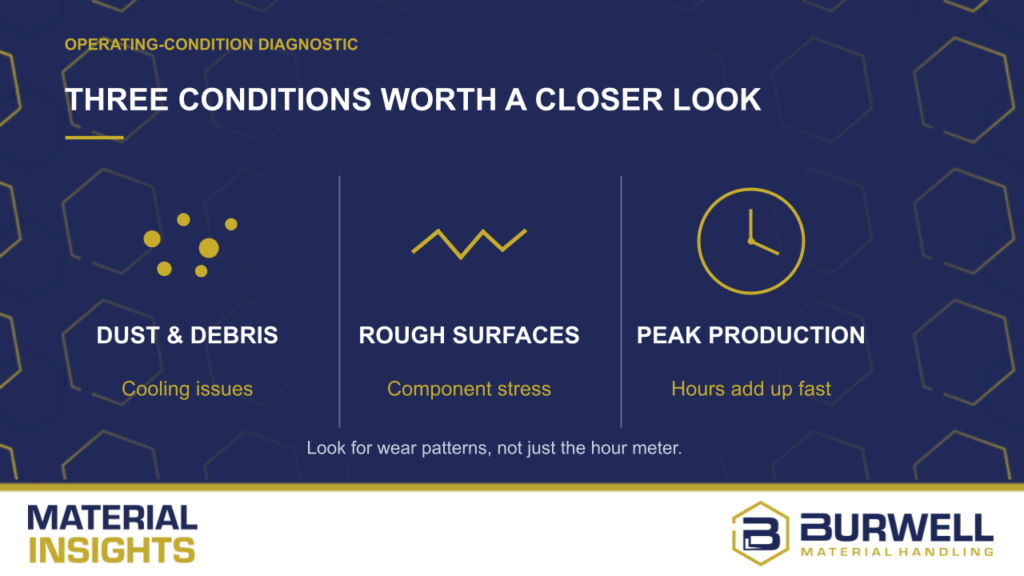
Jennings explains that forklifts carrying heavy loads over potholes or uneven surfaces can place additional stress on mast components, carriage rollers, chains, and steering systems. With much of the counterweight supported toward the rear of the machine, repeated impacts can also affect axle components.
Identifying those types of wear can allow technicians to address a smaller component problem before more extensive repairs become necessary.
Other operating conditions can warrant additional attention as well:
| Operating condition | What to watch for | Maintenance response to consider |
| Dust-heavy operations | Clogged radiators, overheating, contamination | Additional cleaning and targeted inspections between PMs |
| Rough surfaces and heavy loads | Accelerated wear on chains, rollers, and steering components | More frequent component inspections and evaluation of surface conditions |
| Extreme cold | Coolant protection concerns | Check freeze protection before severe temperatures |
| Heavy seasonal production | Rapid hour accumulation and limited service windows | Schedule PMs before or during planned production breaks |
| Demanding operating practices | Premature fluid deterioration or component wear | Investigate operating conditions, training, and targeted service needs |
The appropriate response depends on the equipment, the manufacturer’s guidance, and the conditions observed.
Does every problem call for shortening the PM interval?
Sometimes when wear is observed prior to the maintenance interval, the better response may call for a change in operating practices or correction of a facility condition, like when a forklift’s torque-converter transmission fluid shows signs of overheating and premature deterioration.
Jennings says that condition can sometimes be associated with operators using a forklift to push loads or improperly riding the inching pedal.
“If we’re seeing burnt transmission fluid, I train technicians to go to the manager and say, ‘Let’s talk about how you’re operating this truck,’” Jennings says.
Premature fork wear is another indication that operator behavior may be the source of the issue. Dragging forks across the ground, placing excessive load on one fork, or striking fixed objects can damage equipment in ways that normal lifting operations generally would not.
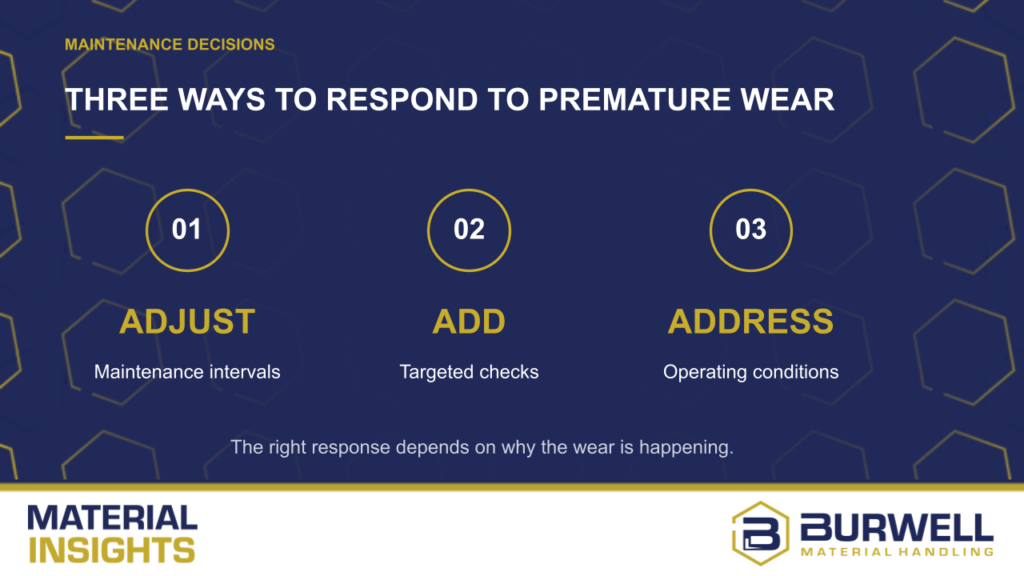
In those cases, increasing inspection or replacement frequency may address the resulting wear, but understanding the operating practices that contribute to the damage is equally important.
Jennings trains technicians to explain their observations, identify possible causes, and present practical options to the customer.
“We want to understand why we’re wearing something out faster than we should,” he says. “Then we can help the customer decide whether that means adjusting maintenance, retraining operators or changing something about the operation.”
The same reasoning applies when a truck repeatedly experiences damage associated with rough floors, impacts or loads that may be poorly matched to the equipment.
How should PM scheduling account for peak operating periods?
Maintenance planning can also become more challenging when forklift usage changes dramatically throughout the year.
Jennings points to produce operations as an example.
During a busy growing or harvest season, forklifts may operate nearly continuously. In slower periods, those same trucks may accumulate relatively few hours.
A maintenance schedule that looks manageable during normal operations may become difficult to accommodate when the trucks are needed across multiple shifts.
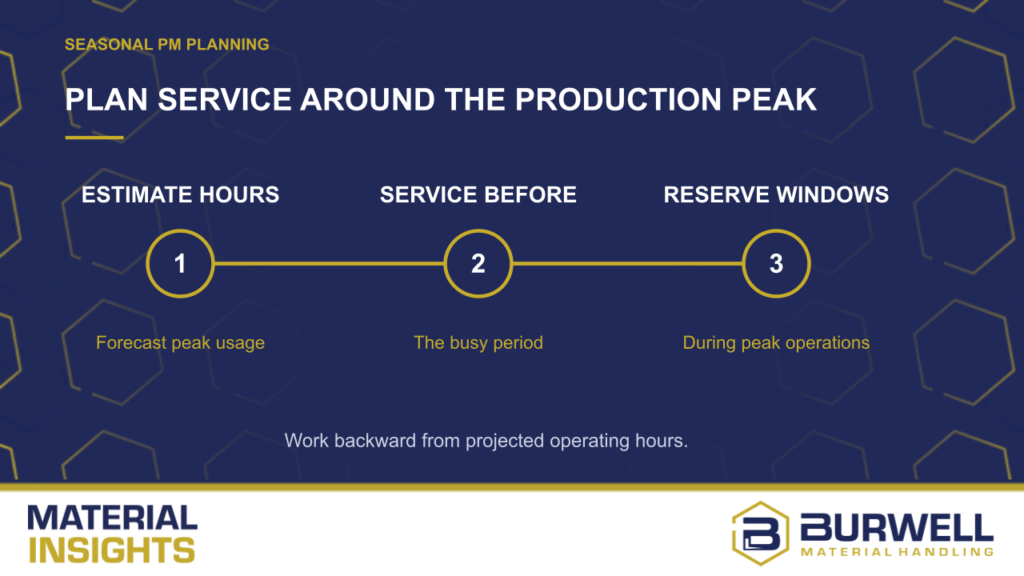
Jennings says the service team should work with the customer to understand those production patterns and plan accordingly.
“We may need to schedule the PM before that big push starts,” he says.
For extended periods of high-volume operation, that may also mean building service windows into the production schedule so equipment can receive maintenance as it reaches the manufacturer’s required intervals.
Consider a forklift that normally accumulates relatively few hours each week but is expected to run 24 hours a day during a seasonal peak. The fleet manager should estimate how many operating hours it will accumulate and work backward from upcoming maintenance requirements.
That helps avoid the choice between interrupting critical production unexpectedly and allowing needed maintenance to become overdue.
How can you tell whether your maintenance schedule still fits the application?
A good starting point is to review what technicians have observed during recent PM visits.
Look for patterns that may indicate the current maintenance approach deserves another look:
- Are the same components repeatedly showing premature wear?
- Are fluids deteriorating or systems overheating before their scheduled service?
- Have operating hours, loads, surfaces, or environmental conditions changed?
- Are certain trucks experiencing more problems than similar units elsewhere in the facility?
- Do peak production periods create gaps in scheduled maintenance?
Jennings emphasizes that technicians should explain both their findings and what those observations may mean for the equipment.
“We use the PM to tell the management team what we’re seeing on the truck and why it may be wearing faster than expected,” he says.
That information helps fleet managers make more informed decisions about maintenance frequency, operating practices, and total cost of ownership.
When an adjustment is made, subsequent PM findings and repair history can help the service team evaluate whether the change is addressing the problem.
Next step
Need help understanding how your applications, environment, and usage are affecting your wear? Talk with your Burwell Material Handling service team about whether targeted maintenance, schedule adjustments or operating changes are warranted.