
AGV vs. AMR: What’s the Difference and Which Fits Your Warehouse?
In today’s warehouses and manufacturing facilities, efficiency is paramount.
Machines such as Automated Guided Vehicles (AGVs) and Autonomous Mobile Robots (AMRs) are transforming material handling, cutting travel time, reducing touches and boosting productivity.
“AGVs and AMRs can offer significant improvements in productivity, safety and cost-effectiveness,” says Stephen Leu, business development manager for Engineered Solutions at Burwell Material Handling. “Choosing the right solution for your needs is important to make sure you’re getting the most out of your investment.”
This guide explores what AGV and AMRs are, the differences, and dives into how these systems can revolutionize your warehouse operations.
What are AGVs and AMRs?
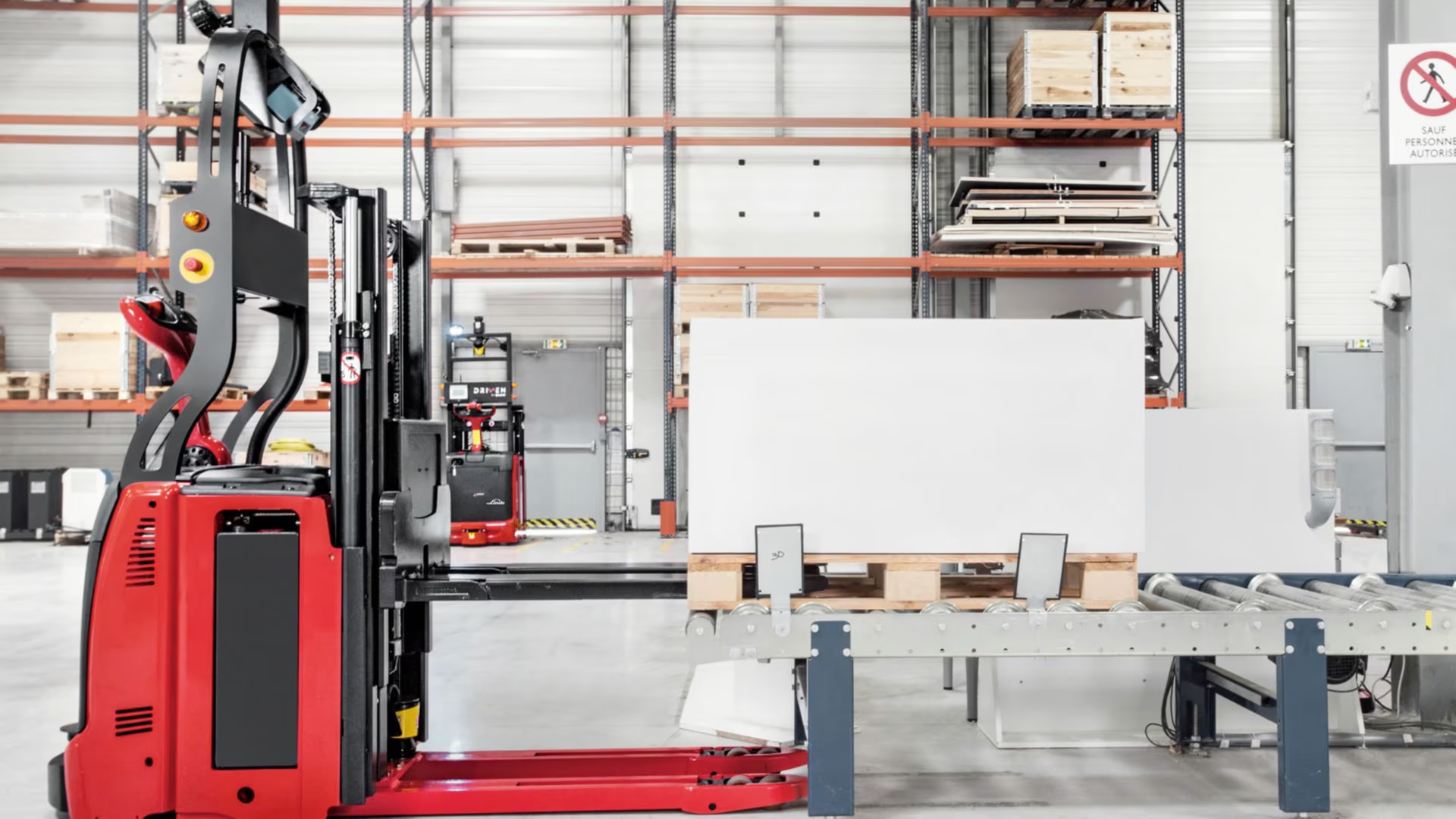
An Automated Guided Vehicle (AGV) is a driverless vehicle that follows predefined paths (magnetic tape, QR/markers, wires, or laser reflectors) throughout a warehouse or facility. This makes them great for predictable, repeatable routes. Any changes to their routes require retaping or reprogramming, making them an easy-to-use tool.
An Autonomous Mobile Robot (AMR) is a mobile robot that uses onboard sensors and mapping (SLAM, vision, LiDAR) to understand the environment and dynamically plan routes. They’re ideal for spaces with shifting aisles, mixed traffic, or frequent layout changes. With their fleet intelligence managing traffic and obstacle avoidance, changing their routes is done by maps and virtual keep-out zones.
- AGV sweet spots: Long, fixed milk-runs; pallet moves from dock to staging; lineside deliveries; zone-to-zone tote shuttles on repeatable paths.
- AMR sweet spots: Piece-pick support (follow/meet me); dynamic replenishment; cross-dock with shifting priorities; kitting; returns; congestion-prone areas.
AGV vs. AMR at a Glance
| Factor | AGV | AMR | When to Prefer |
| Layout stability | Fixed routes; best in stable layouts | Adapts to change; map updates | AGV for static lines; AMR for frequent changes |
| Throughput pattern | High repeatability on set lanes | Flexible, multi-mission flows | AGV for takt-driven flow; AMR for variable tasks |
| Integration | PLC/WMS with traffic control | WMS/WES APIs; fleet manager | Match to your IT stack and data team |
| Safety & traffic | Sensors + guarded aisles | 360° perception & avoidance | Both safe; AMR is better in mixed traffic |
| Time to pivot | Physical/controls rework needed | Virtual map/edit; faster pivots | AMR for seasonal re-slotting/reroutes |
| Capex/opex | Higher unit cost ($300-500K); higher reconfig cost | Lower unit cost (up to $100K); lower change cost | Choose by 3-5 year TCO |
How Do I Choose: AGV or AMR?
Choosing the right machine for you and your warehouse will vary depending on your needs. This includes considering the size of the facility, sensors, fleet size, and integration.
“When it comes to considering which machine is best for your operations, the right choice is typically the one that alleviates the most pain points with minimal disruption to your current operation,” Leu says.
Consider these points in your selection criteria:
- Price point: AGVs often have a lower unit cost, but you’ll need to plan for route hardware/controls changes as processes evolve. AMRs are more expensive, but you can save on future reconfiguration and process pivots.
- Map constraints: Where is travel time highest? Where do errors or traffic jams occur?
- Score layout volatility: Monthly re-slotting? Seasonal reroutes? Frequent aisle changes?
- Quantify workload: Payloads, mission mix, and peak-hour lines.
- Model both options: Compare a pilot lane with an AGV vs. an AMR, then measure lines/hour, wait time, and no-go events.
- Plan safety and IT: Define keep-out zones, people/equipment traffic, WMS/WES/API needs, and data ownership.
- Stage the rollout: Start in one zone/shift, prove KPIs, then scale.
FAQ: AGV vs. AMR
What is the main difference between an AGV and AMR?
AGVs follow predefined routes, while AMRs perceive their surroundings and plan paths in real time.
Are AMRs always better than AGVs?
No. In stable, repeatable flows, AGVs are simpler and efficient. AMRs shine when layouts and priorities change more often.
Can AGVs and AMRs work together?
Yes. Many facilities run AGVs for fixed milk-runs and AMRs for dynamic tasks.
How do I estimate ROI?
You should model the current travel and touches, then simulate missions with an AGV vs. an AMR. Compare three- to five-year TCO including reconfiguration costs.
Next Step
AGV systems are a powerful tool for optimizing warehouse operations. Not sure which one fits your business? Let’s connect.