
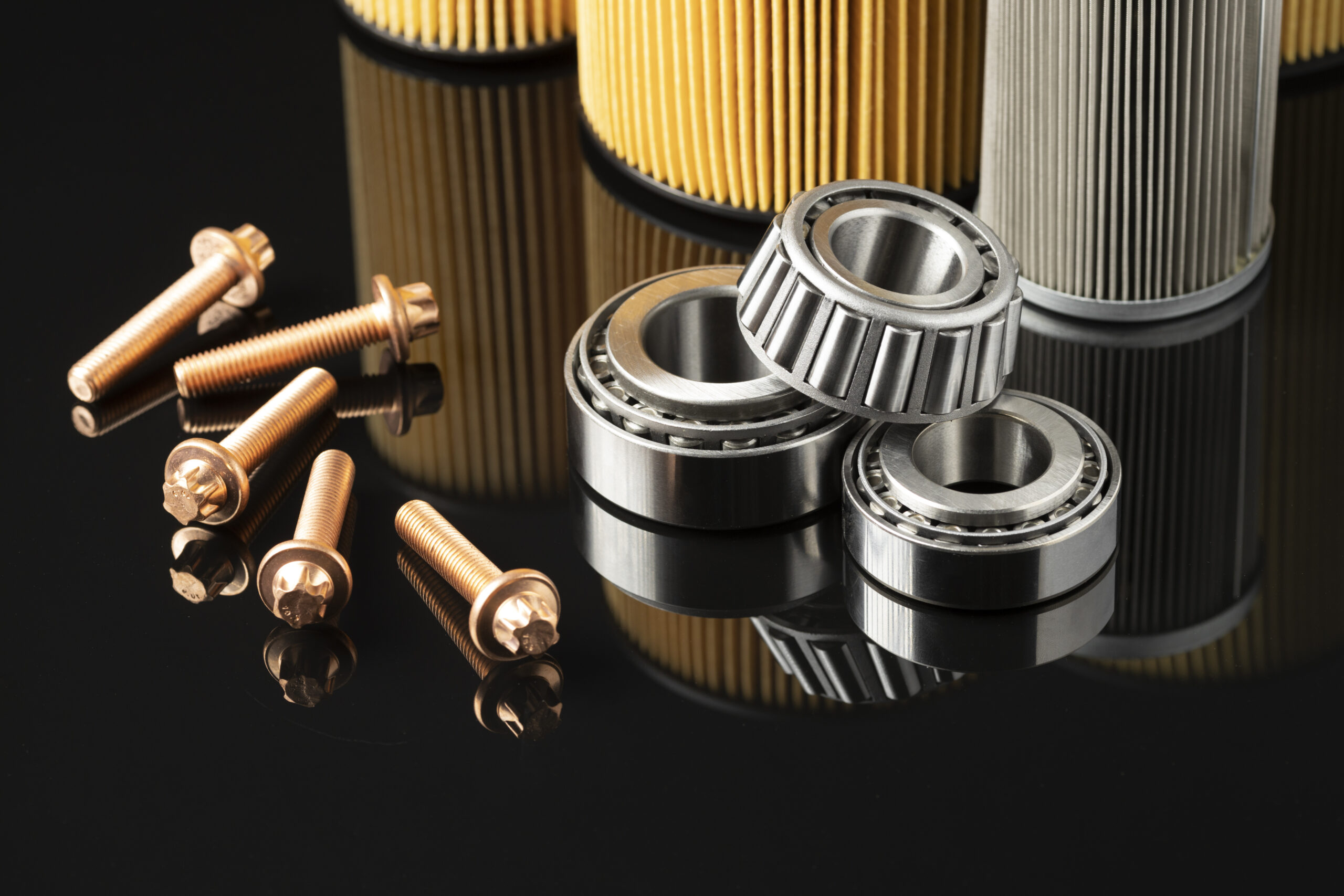
Critical Spares Strategy for Forklifts: What to Stock
Most material handling operations don’t need every part on the shelf for their forklift fleet.
However, every operation has a short list of failures that turn into a full stop: Production pauses, shipping slows, and the day gets expensive fast.
A critical spares strategy for forklifts is the plan for that reality, and that includes deciding what needs to be available immediately, what can be ordered, and what’s not worth tying up cash and storage space.
“When evaluating which parts to stock, the immediate thought is whether this is the type of part that will down my operation completely,” says Lindsey Coffman, District Service Manager for Burwell Material Handling. “Think about whether your operation can function with this not working.”
Step 1: Define what ‘critical’ means in your facility
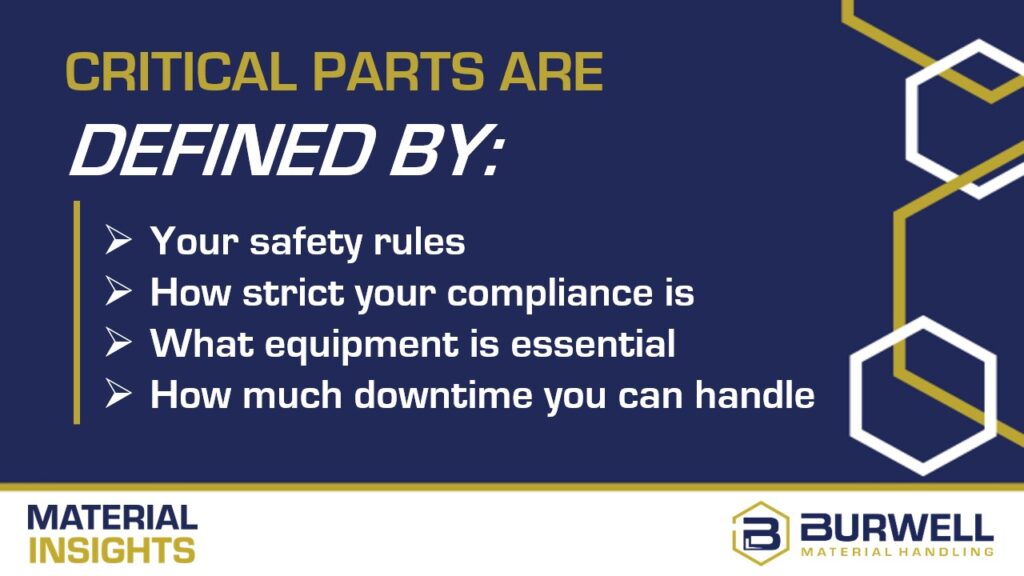
Critical parts are defined by:
- Your safety rules
- How strict your facility is about compliance
- What equipment is essential to the flow
- How much downtime you can absorb
Coffman says these parts could be pretty basic and sometimes overlooked in light of their significance to the operation.
“It could be as simple as a horn,” she says. “Some plants may say you have to tag out your forklift until that’s fixed.”
Step 2: Start with a fleet analysis
A critical spares strategy falls apart when it ignores reality, especially in mixed fleets. This is something each operation should partner with their vendor on when setting up their plan, Coffman says.
“For me, that fleet analysis in the beginning is super important to understand what equipment they have and how they’re using it,” she says. “You may not need to stock something that is for an electric lift if 95% of your fleet is LP.”
Coffman says you need to not only provide a total inventory of the assets in your fleet, including category, class, make, and model, but you also need to know how often you’re running your equipment and the conditions that equipment is operating in.
All those factors help determine which parts are critical to stock.
Step 3: Tier your parts according to three status levels
A practical way to keep this from becoming a shopping list is to separate parts into tiers.
Tier A: ‘This stops production’
Coffman describes these as the parts that will shut down or significantly impact your production.
Examples include:
- Safety items that trigger tag-out policies (horns, lights, alarms)
- Mission-critical components for certain fleets (regulator/lock-off valve for LP units)
“You may want to have one spare regulator/lock-off valve per however many lifts of that type,” she says.
Tier B: High-usage PM parts
These don’t usually stop your production, but they’re the most consistently used and the easiest to plan.
“Your basic PM parts, such as filters, oils and lubricants, those are going to be probably your most commonly used items,” Coffman says.
Tier C: Situational spares
This is where failure history, usage, and judgment matter on whether to stock parts that are expensive or bulky.
“You may want to keep one seat in stock, or you may want to have seat switches depending on the type of unit and availability,” she says.

Step 4: Decide to stock it with two questions
If you want a simple go-no go critical parts stocking framework, ask yourself these two questions:
- Will this part stop production (or force tag-out) if it fails?
- How long will we be down if we don’t have it on-site? (including shipping realities and vendor lead time)
If both answers make you uncomfortable or are too costly, the part should belong in your critical spares plan.
Next step
Your critical spares strategy is about removing the failures that stop production based on your fleet, your policies, and your real downtime risk. If you need help forming your plan, contact your Burwell Material Handling team of experts today.