
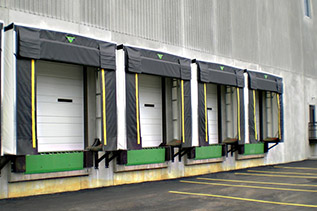
Dock Seals vs. Dock Shelters: Cost, Protection, and How to Choose for Each Bay
Your loading dock is where outside conditions meet your operation.
The right sealing gear keeps weather, pests, and dust out, plus it keeps air conditioning and heat in.
“When you’re thinking about what kind of dock sealing gear to purchase, it’s crucial to match the opening to the different types of gear and not the other way around,” says Tom Racer, industrial products sales representative for the Engineered Solutions team at Burwell Material Handling. “When the dock equipment fits both the traffic flow and trailer mix, you’re more likely to stop leaks and headaches.”
This guide explains the differences between the two most common sealing gears, dock seals and dock shelters, the benefits of each, and how to spec them for your doors.
What’s the Difference Between a Dock Seal and a Dock Shelter?
Dock Seals
A dock seal is a simple piece of equipment made from a fabric-covered foam core or fabrics. It’s installed around the exterior opening of a dock door. When a trailer backs up to the dock seal, the fabric wraps around the rear opening of the trailer to create a seal.
Dock seals are the more economical option compared to shelters, as they block out environmental elements like wind, precipitation, and pests from entering through the gaps around a trailer. However, they don’t create as tight and secure of a seal as a shelter.
Dock Shelters
A dock shelter is constructed from aluminum or steel framing with fabric tops and sides. This rigid structure creates a vestibule that a trailer can back into securely, creating a tight seal with less gaps.
Dock shelters provide superior sealing and environmental protection compared to basic seals. They are more expensive but offer advantages like better access to the trailer interior and protection for both the dock door and trailer.
Where Does Each Fit Best?
Use these patterns to match equipment to openings:
- Seals: consistent trailer heights, moderate traffic, budget priority, and interior where full‑corner access is less critical.
- Shelters: mixed fleets (vans + reefers + liftgates), windy sites, temperature‑controlled docks, and bulky freight needing corner access.
“One major factor in deciding whether you need a dock seal vs. shelter is the door size,” Racer says. “Doors that are 8 ft. x 8 ft. and 9 ft. x 9 ft. are best for seals. If you have a door that’s larger than 10 ft. x 10 ft., you need to go with a shelter.”
At a Glance: Seals vs. Shelters
| Factor | Dock Seal | Dock Shelter | Implication |
| Trailer variation | Best with consistent sizes/door heights | Handles mixed trailer sizes and liftgates | Shelter fits fleets with variability |
| Sealing effectiveness | Good; compression pads can leave gaps on mismatched trailers | Tighter seal via vestibule design | Shelter improves climate and pest control |
| Interior access | Pads can reduce door opening width/height | Full access to corners/ceiling of trailer | Shelter speeds loading of bulky freight |
| Impact tolerance | Pads can tear or compress over time | Rigid frame; replaceable curtains/wear pleats | Shelter components are serviceable |
| Upfront cost | Lower | Higher | Choose by 3-5 year TCO |
| Maintenance | Simple; watch for tears/water intrusion | More parts; inspect frames/curtains/seals | Plan PM to extend life |
| Energy control | Good on matched trailers | Better in mixed fleets and windy sites | Shelter lowers energy loss |
How Do I Pick the Right Seal?
Figuring out which type of dock equipment makes the most sense for your loading bays depends on factors like:
- Your facility’s needs for climate and pest control
- The types of trucks and trailers you need to accommodate
- Your maintenance and operating budget
“If you’re fighting gaps with swing‑door trailers, that’s something you need to take in account,” Racer says. “Making sure you’re evaluating all the different aspects of your operation lets you make the best decision for your organization.”
Consider specifications such as:
- Measure trailer mix: Door heights, widths, and typical bumper‑to‑ground dimensions.
- Confirm dock height, drive slope, bumper projection, and door size.
- Choose seal projection/foam density or shelter frame depth to ensure contact without crushing hardware.
- Add wear pleats, rain hoods, and draft flaps where weather demands it.
- Plan bollards/guards to protect frames and pad corners from impacts.
FAQ: Dock Seals vs. Shelters
Do shelters always seal better than seals?
In mixed fleets, usually yes. Seals can work well with consistent trailer heights. That’s why it’s important to pick based on your traffic pattern.
Will seals restrict trailer access?
They can reduce opening dimensions slightly. If you need full‑corner access for bulky goods, shelters are a better fit.
What shortens equipment life the most?
Unprotected frame/pad impacts, water intrusion, and mis‑sized units that are over‑compressed or barely making contact all shorten equipment life drastically.
How do I cut energy loss fastest?
Fix the worst bays first. Add shelters or re‑spec seals with proper projection and head coverage. Then verify contact during windy or rainy conditions.
Next Step
Not sure which bays need shelters versus seals? Contact our team today.