
Electric vs. Diesel Forklifts: The Best Fit For Your Operation
Adapted with permission From Clark
What’s the Difference Between Electric and Diesel?
Electric forklifts are available in sit-down and stand-up models. They use rechargeable batteries (lead‑acid or lithium‑ion) for power, and are best for indoor or precision work due to their maneuverability, lower noise levels and zero point‑of‑use emissions.
Some common electric forklift types include counterbalanced, reach trucks, and side loader forklifts.
Diesel forklifts use internal combustion engines (ICE) and are best for outdoor work, heavy loads, and uneven terrain. Think of situations such as yards, construction sites, outdoor staging, steep grades or rough terrain.
Diesel forklifts are divided into two main categories based on the kind of tires they use and environments they’re designed to operate in: internal combustion (IC) cushion trucks and internal combustion (IC) pneumatic trucks.
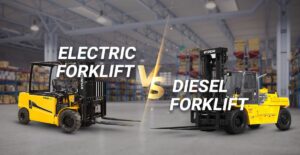
Electric vs. Diesel at a Glance
| Factor | Electric | Diesel | Best When… |
| Environment | Zero exhaust; quiet; ideal indoors | Emits exhaust; loud; excels outdoors | Air quality/noise limits vs. outdoor power needs |
| Power/Torque | Responsive, precise control | Higher peak torque for grades/heavy loads | Precision picks vs. heavy/long runs |
| Run Time | Shift length depends on battery/charging | Fast refuel; long continuous shifts | Limited breaks for charge vs. long shifts |
| Maintenance | Fewer moving parts; longer service intervals | Oil/filters 500-1,000 hrs; more consumables | Lower shop time vs. easy fueling |
| Operating Cost | Lower energy/maintenance; battery lifecycle | Higher fuel and maintenance costs | TCO priority vs. rugged duty priority |
| CapEx | Higher upfront w/ charger(s) + infrastructure | Often lower upfront for truck alone | Facility ready for chargers vs. fuel storage |
| Noise | ≈60-70 dB typical | Higher; varies by model/load | Noise‑sensitive vs. outdoor tolerant |