The True Cost of Forklift Fork and Chain Wear
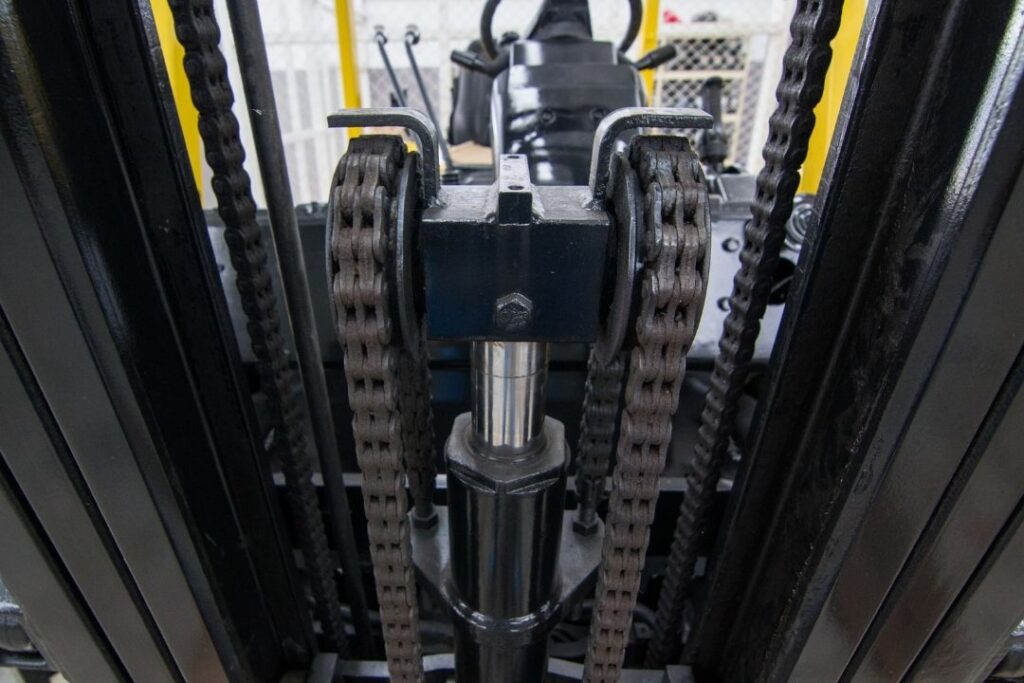
Forklift fork and chain wear often doesn’t seem like a major problem – until it is.
When they fail, the cost isn’t just the part; it’s everything that happens because the part failed. This includes disrupted schedules, damaged assets, emergency repairs, and in the worst cases, an incident that results in injuries.
“If you have a chain failure, if you have one break, the forklift load is definitely coming to the floor,” says Terry Akers, forklift technical communicator for Burwell Material Handling. “Everything that’s on that forklift is coming down.”
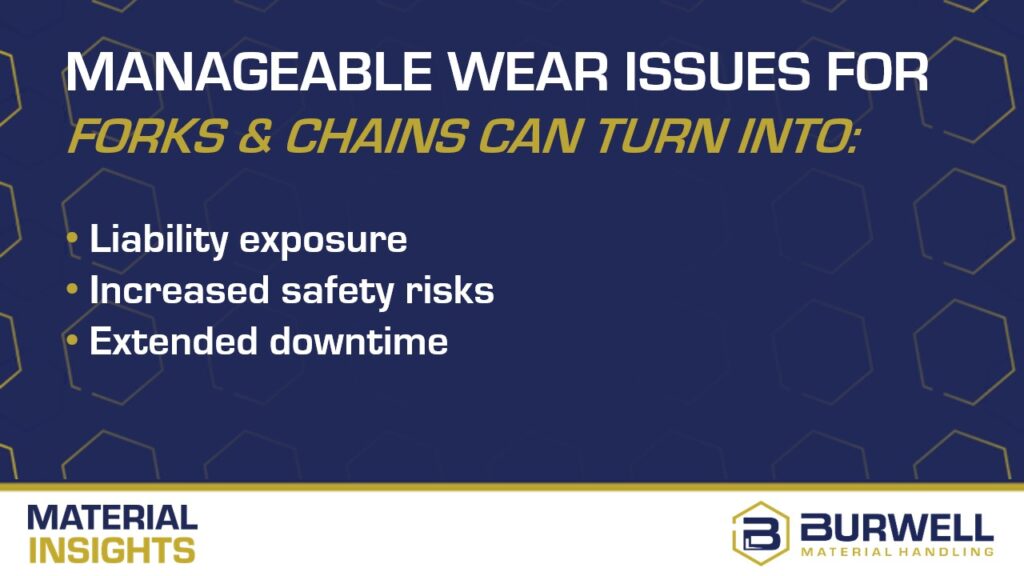
What started as a manageable wear issue can quickly escalate into liability exposure, increased safety risks, and extended downtime.
That’s why forklift fork and chain wear belong in the same conversation as your forklift’s total cost of ownership (TCO). Akers says there’s a series of cascading costs that must be considered when a wear item gets pushed too far.
The failure cost ladder for forklift fork and chain wear
When a fork or chain fails, the consequences stack. Even the best outcome is still expensive, because you’re dealing with interruption and damage.
“You’re going to have damaged products, and that’s in the least damaging scenario,” Akers says. “The worst-case scenario, you’re going to have a hurt individual, and your equipment may sustain additional damage. There’s lots of consequences.”
Here’s what that often looks like in real operations:
- Unplanned downtime: One truck down becomes a bottleneck, especially if that truck is tied to a key process.
- Product + equipment damage: Dropped or shifted loads damage inventory, forks, attachments, racking, floors, or nearby assets.
- Safety incidents: Falling loads can affect more than the items around them; they can injure people and trigger costly investigations.
- Liability exposure: After an incident, your operation’s documentation and inspection history will be a factor.
Why forklift fork and chain wear multiplies TCO
Wear on your forks and chains doesn’t stay neatly contained to a single component, Akers says. It can affect how the entire lifting system operates, which can stress adjacent components.
“As the chains stretch out, the hoses are going to stretch equally with them and other items can fail around that,” says Tony Jennings, technical training manager at Burwell Material Handling.
That’s the TCO multiplier. Instead of one predictable replacement, you risk secondary failures and secondary repairs, often on a timeline you can’t control due to rush parts, emergency service, overtime, rental coverage, and missed ship windows.
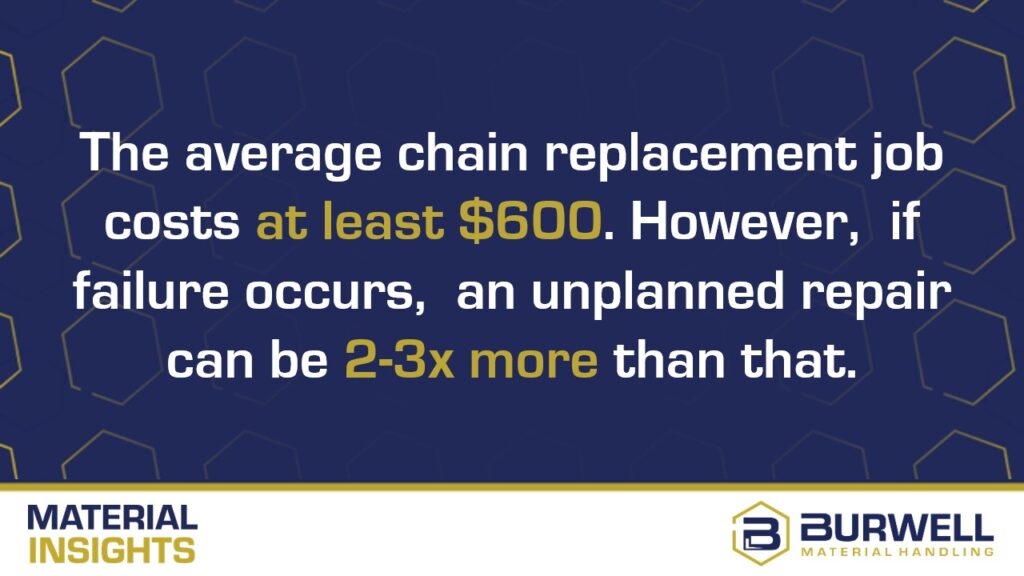
Take the average chain replacement job, which Akers says costs at least $600. However, if failure occurs, an unplanned repair can be 2-3x more than that. The average reactive repair costs $1,600, says Lindsey Coffman, key accounts manager at Burwell Material Handling.
Regular inspections by qualified technicians during planned maintenance can help identify wear thresholds and avoid adding unnecessary costs and downtime due to failures. If a forklift chain stretches beyond 3%, its strength is reduced, and a replacement is warranted. For forks, if wear has reduced the heel to 90% of its original thickness, it cannot return to service.
Planned maintenance for forklift fork and chain wear beats emergency downtime
The upside of regular, qualified technician inspections is that it benefits both your team’s safety and operational predictability.
“In our industry, uptime is of the utmost importance,” Jennings says. “With inspections and planned maintenance, it also can prevent other items from failing.”
When you schedule regular forklift inspections and planned maintenance, you control labor, parts timing, and the impact on production. This results in better overall control of your forklift TCO.
Next step
If you’re trying to manage forklift TCO, treat your fork and chain wear as leading indicators. Contact the Burwell Material Handling team of experts today.