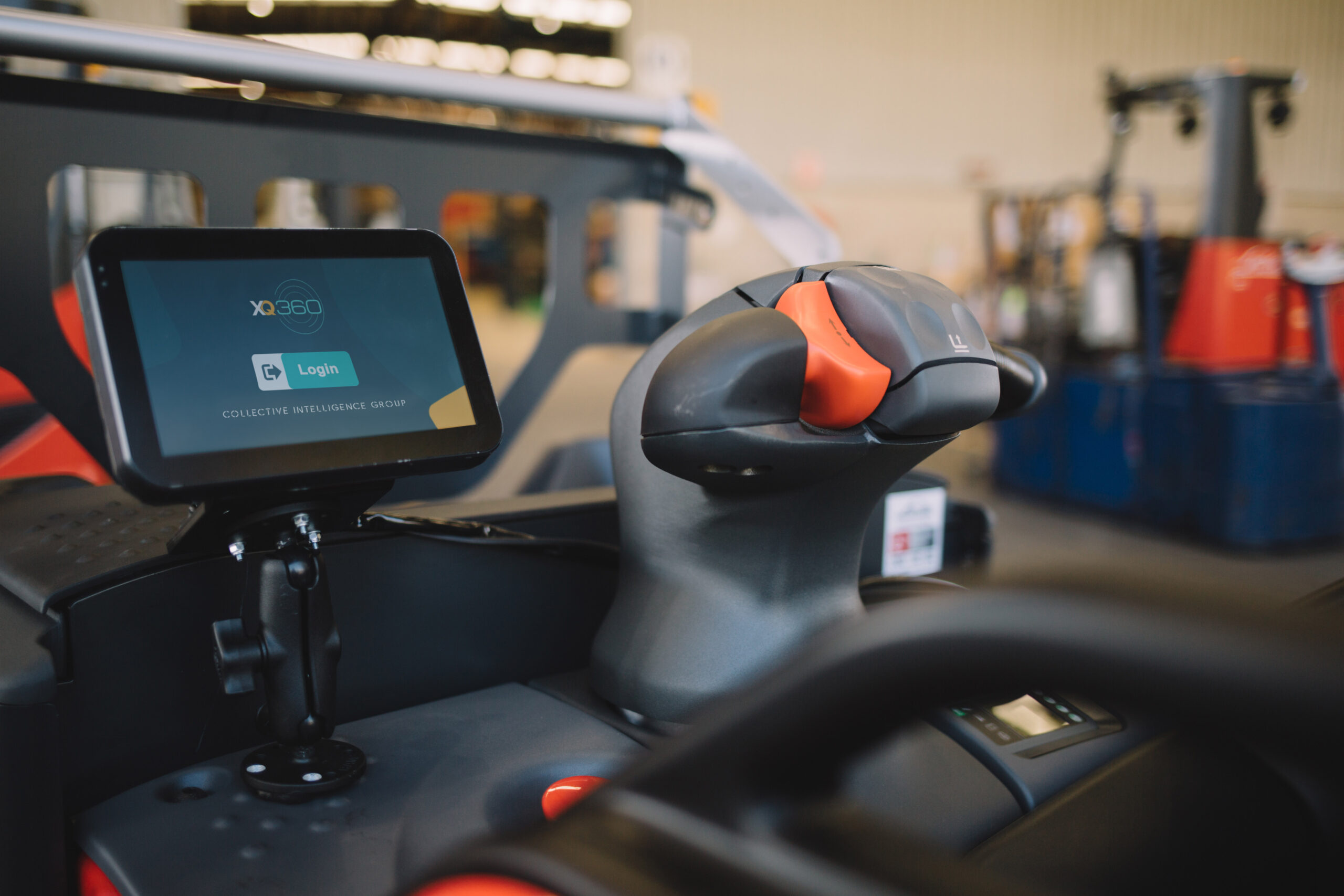
Forklift Telematics Rollout in 30 Days: What to Set Up for the Biggest Impact
Forklift telematics can create better visibility into safety, compliance, utilization, and operator behavior.
But the value does not come from the dashboard alone.
It comes from what gets set up before the system starts producing data.
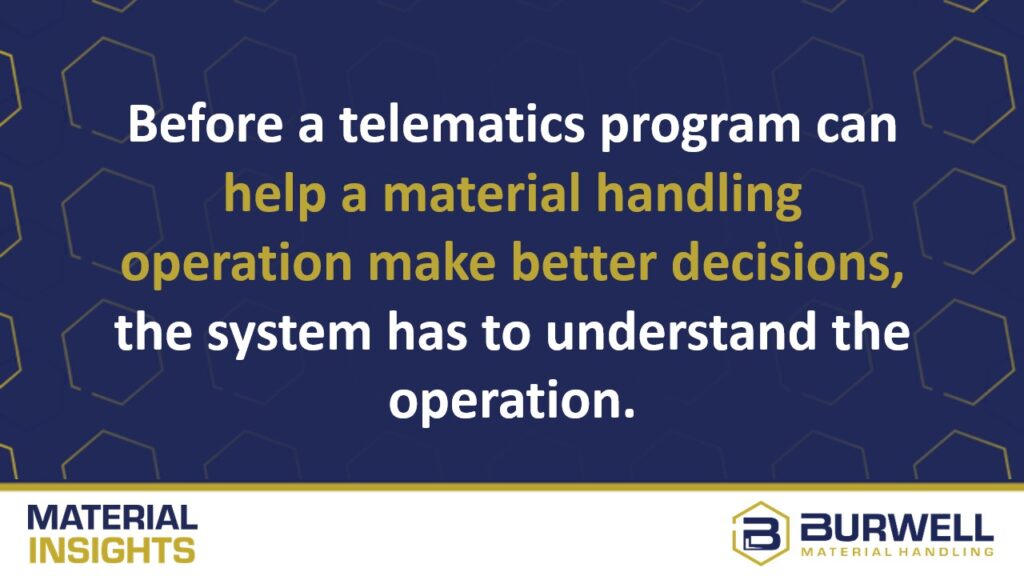
Before a telematics program can help a material handling operation make better decisions, the system has to understand the operation. Jeff Buyck, CTO of Burwell Enterprises, says that includes sites, equipment, operators, certifications, checklists, thresholds, and who is responsible for using the information.
“Initially, we need to set up the organization’s structure,” Buyck says.
That is what makes the data usable, he says.
Make the dashboard match the operation
Your dashboard needs to reflect how your organization actually operates.
For a single-site operation, that may be fairly straightforward, Buyck says. For a company with multiple facilities, the system needs to be organized by site, equipment type, operator groups, and dashboard access.
Your setup should answer a few practical questions:
- Who needs dashboard access?
- Which sites or departments should be visible?
- Which machines are included?
- Which operators should be tied to which equipment types?
- Who receives reports?
- Who reviews exceptions?
Build operator access, certifications, and pre-op checklists into the workflow
In a material handling operation, telematics is not only about where a machine is located.
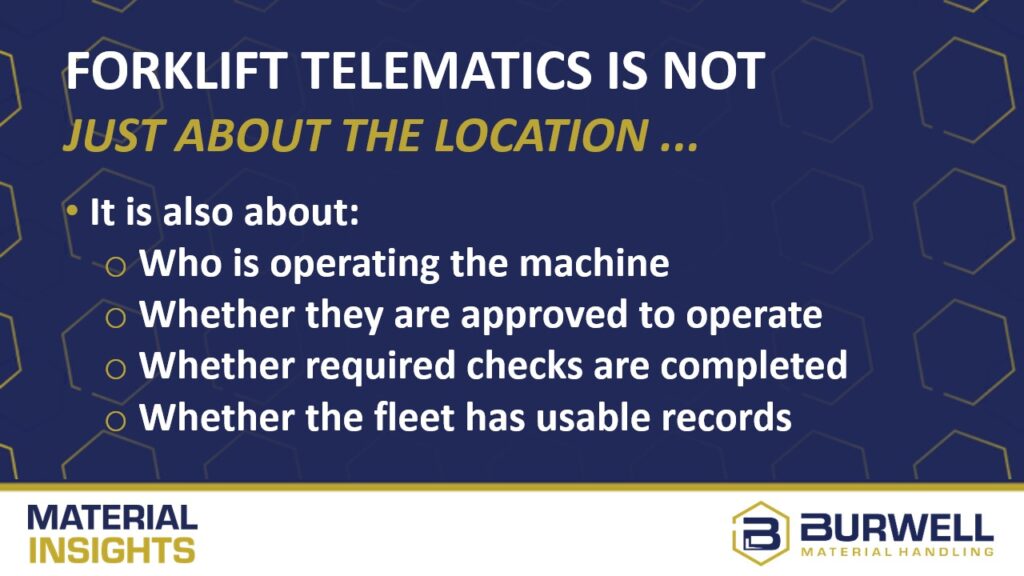
It is also about who is operating it, whether they are approved to operate that equipment, whether required checks are being completed, and whether the fleet is producing records that managers can actually use.
“We’re also setting up operators,” Buyck says. “So which operators are approved to operate which type of lift?”
That access control matters because not every operator should be assigned to every machine. Different equipment types may require different training, certification, or experience.
Telematics can also help track certification information, Buyck says.
“We’re going to upload forklift certification training information because it can track when employees are coming due for their certification training,” he says.
Then comes one of the most practical first wins: the pre-op checklist.
“Telematics has been around for quite a while, but its ability to manage pre-op checklists still makes a difference today,” Buyck says.
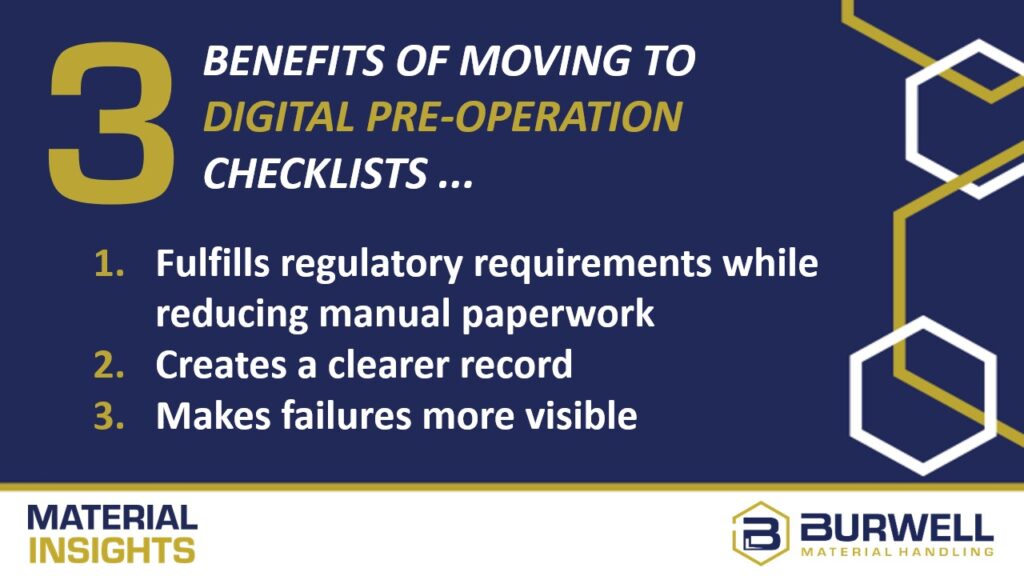
For many operations, that is where telematics becomes immediately useful. A digital pre-op checklist can help fulfill regulatory requirements while reducing manual paperwork, creates a clearer record, and makes failed checklist items more visible.
Use the first 30 days to assign ownership and build habits
Buyck says the first month should not be treated as “set it and forget it.”
Once your telematics solution is live, the early follow-up should confirm that what was set up is actually working.
That includes basic questions:
- Do badges work?
- Are checklists functioning?
- Are impact thresholds too sensitive?
- Are alerts creating too much noise?
The more important question is what happens after data starts collecting.
Buyck says one of the biggest opportunities comes after you have 30, 60, or 90 days worth of data. At that point, the question becomes: “What are you doing with it?”
That is where ownership matters.
“It’s really just making sure you have a champion that’s working with the system and they’re looking at the reports,” Buyck says.
That champion may be a fleet manager, safety manager, maintenance leader, or fleet data, depending on the organization. The title is less important than the habit.
“We can do the training,” Buyck says. “It’s just making sure that they’ve created new habits to do something with it.”
Quick 30-day rollout checklist
By the end of the first 30 days, a material handling telematics rollout should have:
- Sites, equipment, and organization structure set up correctly
- Operators assigned to the right equipment types
- Certification data loaded where applicable
- Pre-op checklists active
- Impact thresholds tested and adjusted as needed
- Managers trained on dashboard access and reporting
- Operators trained on badge scans and checklist workflow
- A clear internal champion or point person
- A review rhythm started
A successful rollout does not end when the system goes live. It continues as the right people learn how to use the data and what to do with it.
Next step
If you’re evaluating forklift telematics, contact your Burwell Material Handling team of experts. We can help you set up the system, train the right people, and build the habits that turn fleet data into action.