
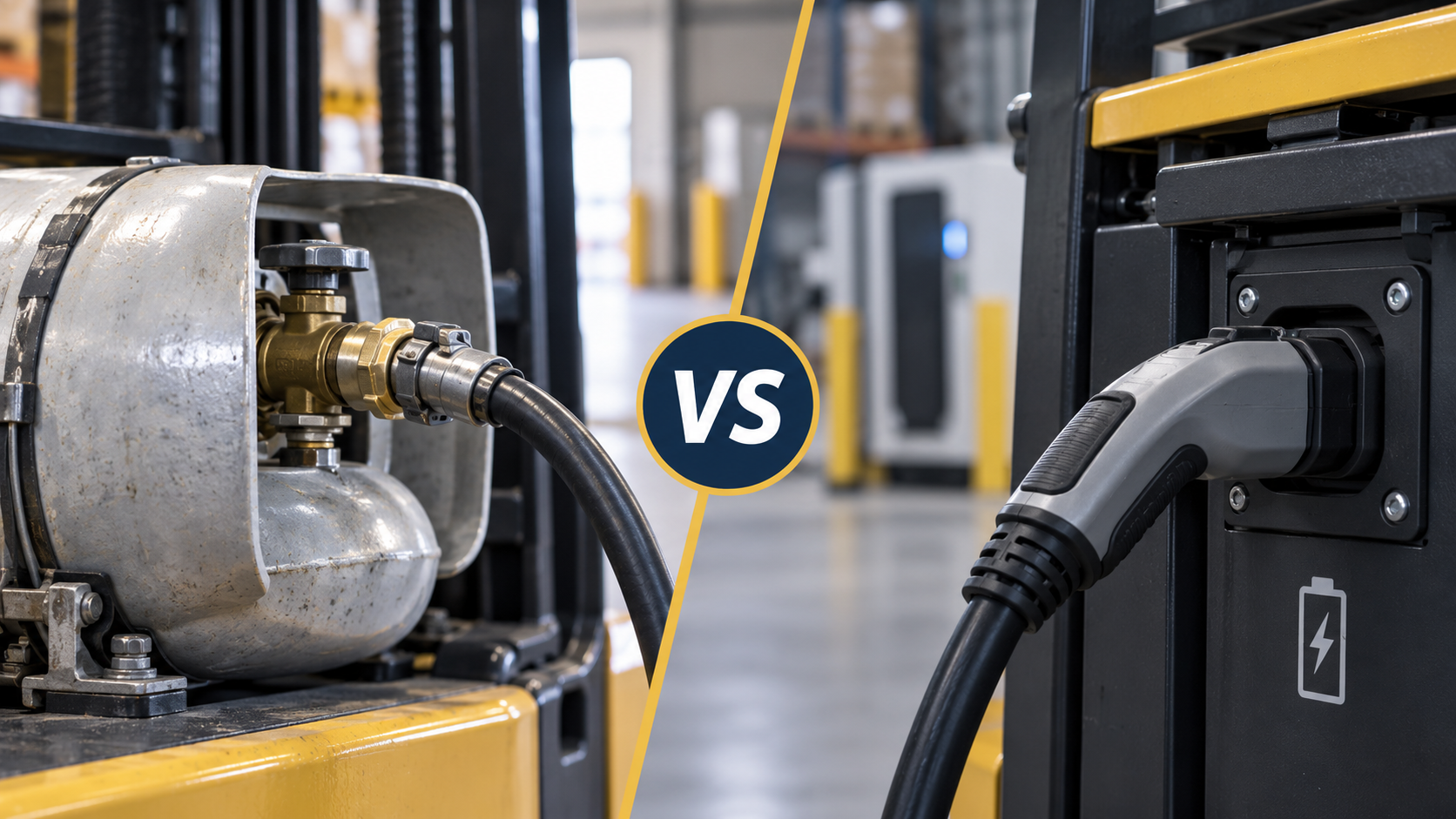
LP vs. Electric Forklifts: How to Choose for Your Duty Cycle, Site, and Growth
Choosing between an LP (propane) and electric forklift used to follow some fairly predictable rules of thumb.
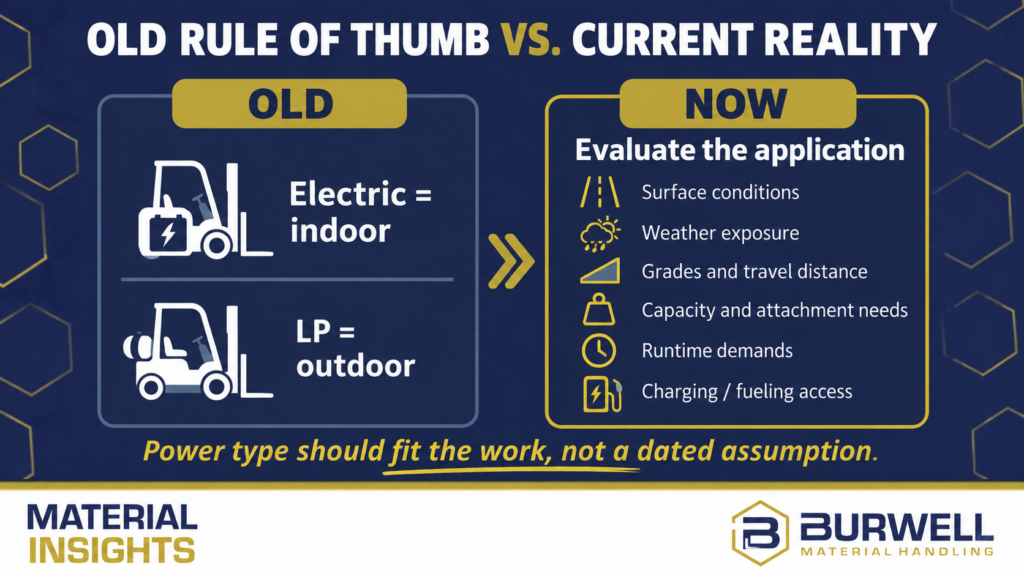
Indoor warehouse? Electric. Outdoor work or long shifts? LP.
Those distinctions can still matter, but today’s decision is more nuanced. Electric forklifts have expanded into applications once dominated by internal-combustion trucks, with lithium-ion batteries and opportunity charging changing how electric equipment can function across longer shifts.
Now, the decision on whether to select an LP vs. electric forklift should focus on what your truck actually has to do throughout the day.
“You need to take into account the full workday, including hours, shifts, surfaces, loads, and where the truck is going to fuel or charge,” says David Levingston, district director for Burwell Material Handling. “Those details usually give you a pretty good direction on what will fit the operation.”
Start with the duty cycle
Your duty cycle is more useful than a simple “hours per year” number.
Look at when the forklift is working, how long it runs continuously, how demanding the application is, and what opportunities exist to stop for fueling or charging.
For example, two operations may each put eight hours a day on a truck, but use those hours very differently. One may have predictable breaks, shift changes, and periods of lighter use. The other may need the forklift moving almost continuously during a production window.
Those differences matter.
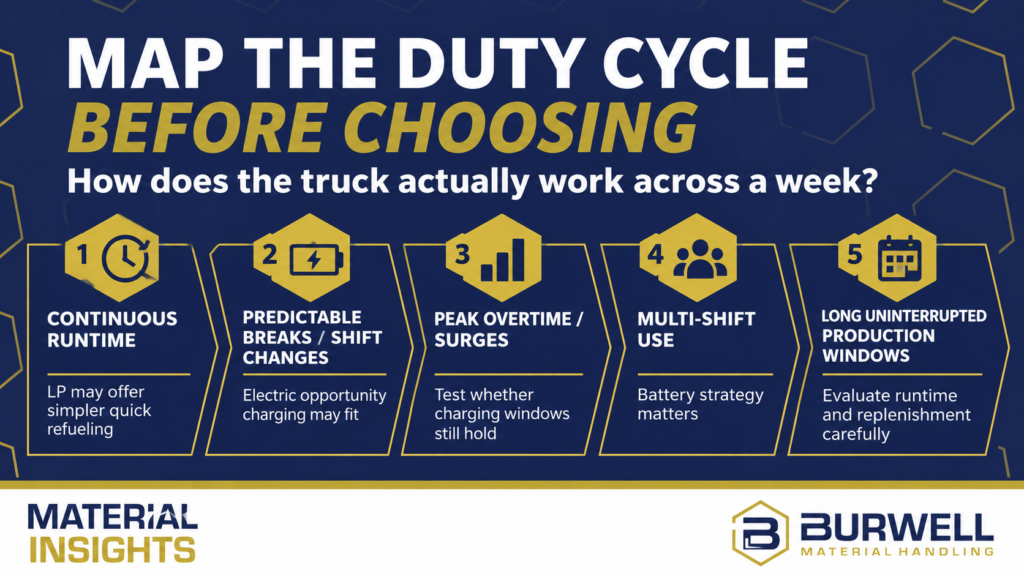
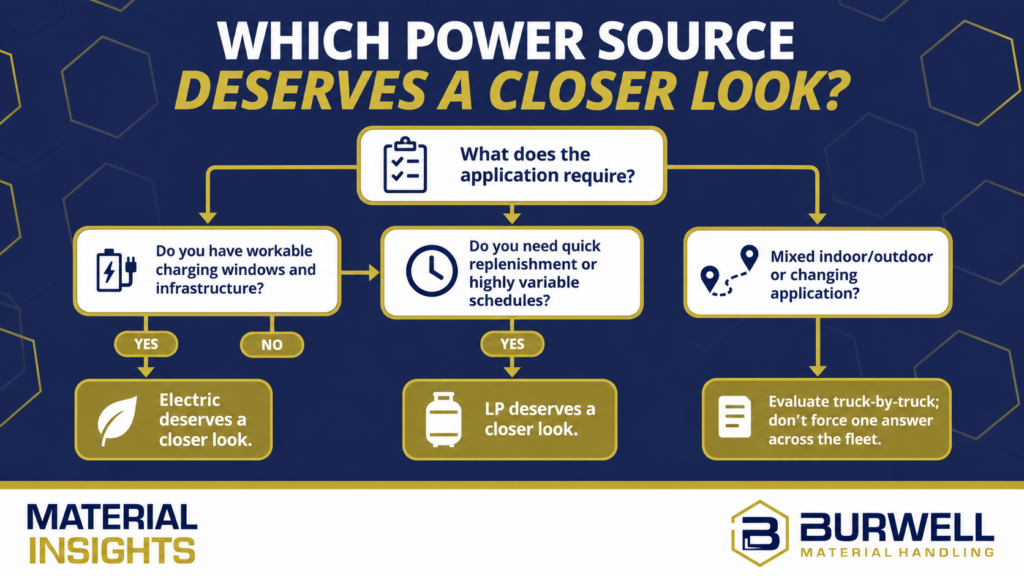
With an LP forklift, changing a propane cylinder can get the truck back to work quickly. That can be appealing when the operation has limited downtime between cycles or shifts.
With electric, you need to go a layer deeper and ask what kind of battery and charging strategy you are considering. Conventional lead-acid charging, battery swapping, fast charging, and lithium-ion opportunity charging create very different operating models.
Opportunity charging allows a forklift to be plugged in during scheduled breaks or other downtime. Lithium-ion systems are ideal for this because they can accept shorter charge periods without the same watering and cool-down requirements as traditional lead-acid batteries.
Levingston suggests before deciding, map a real week of operation. Include normal shifts, peak periods, overtime, seasonal surges, and what happens when production runs longer than planned.
Treat charging or fueling as part of the forklift spec
Levingston says the fueling or charging plan needs to be part of the overall equipment decision.
If you are considering electric, you need to look beyond the forklift and assess whether your facility can support its charging plan.
- Where will chargers go?
- Does the facility have the necessary electrical capacity?
- How many trucks may need to charge at once?
- Are there natural opportunities throughout the workday?
- If the operation adds a shift or several trucks in the next few years, will the same setup still work?
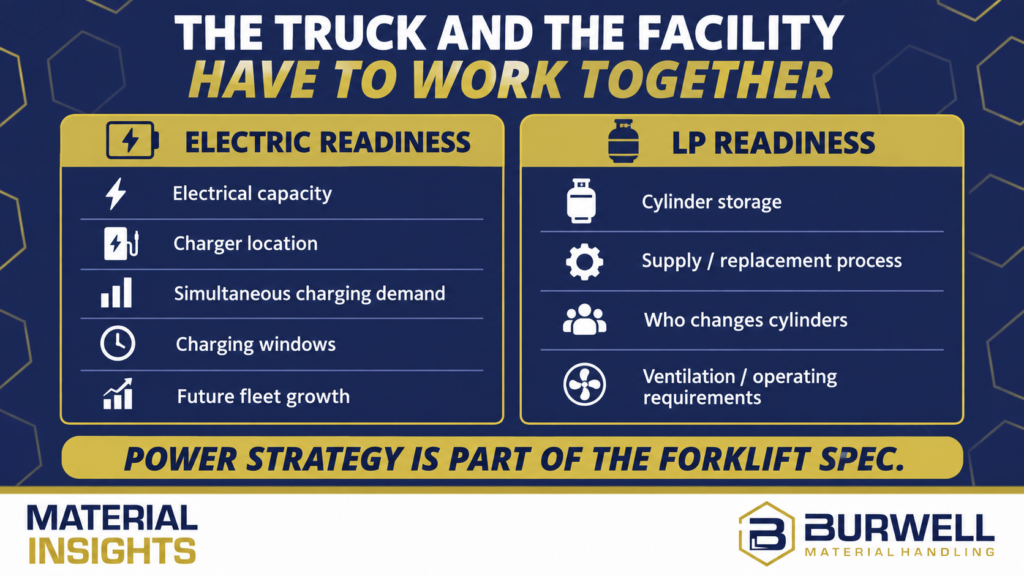
Charging location matters too. It needs to be designed around traffic, workflow, electrical service, and safe access.
“With electric models, the truck and the building have to work together,” Levingston says. “You can’t proceed with electric without thinking through how your facility is set up and will accommodate charging.”
LP also requires a different set of planning criteria for your facility.
Consider where cylinders will be stored, how replacements will be supplied, who is responsible for cylinder changes, and what ventilation and operating requirements apply to the areas where LP trucks will run.
Recheck assumptions about where electric can work
“Electric equals indoors” as an overall statement is a presumption of the past.
Electric pneumatic forklifts are now available for outdoor work, rougher surfaces, and higher-capacity applications. Current models in the market extend electric power into yards and other demanding material-handling environments that historically relied heavily on internal-combustion equipment.
That does not mean every electric forklift belongs outside.
You still need to evaluate the specific truck against the full application: concrete, asphalt, gravel, grades, ramps, wet conditions, temperature, travel distance, load weight, tire requirements, and how often the truck moves between indoors and outdoors.
“A lot of the old assumptions about electric are changing,” Levingston says. “You need to evaluate it against the specific application.”
Make the decision for the operation you expect to have next
The best LP-versus-electric decisions should be forward-looking. Consider how the operation may change over the next several years.
Will you:
- Add shifts?
- Increase throughput?
- Expand the building?
- Move more work outdoors?
- Add trucks?
- Change load profiles?
- Increase sustainability goals?
- Have less internal maintenance capacity?
The answer may also differ across the same facility.
“Sometimes one power source works across the whole operation, and sometimes it doesn’t,” Levingston says. “Don’t force a truck to fit just based on your familiarity with the model or whether it works elsewhere in your facility.”
The same principle should apply to maintenance planning. Whichever power source you choose, understand the service requirements and how they fit your internal capabilities or dealer support.
Quick decision check
Take a closer look at electric when you have viable charging opportunities, indoor air quality and noise are important considerations, lower routine maintenance is a priority, and the battery strategy fits the work cycle.
Take a closer look at LP when quick refueling, highly variable operating schedules, or certain continuous-duty and application requirements make that flexibility valuable.
Next step
If you’re evaluating LP vs. electric forklifts, contact your Burwell Material Handling team of experts to help assess which equipment and energy strategy best fit those requirements.