

How Material Handling Automation Improves Safety, Reduces Costs
In warehouses and distribution centers, automation is often pitched as a way to save time, cut labor, and boost efficiency.
But focusing only on productivity misses a critical part of the story: material handling automation also transforms safety — and that directly impacts costs.
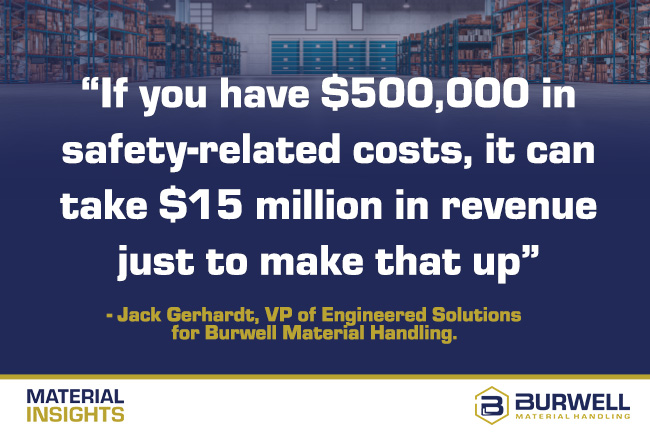
Here’s how organizations should think about material handling automation not just as an efficiency driver, but as a safety investment.
The Safety-Cost Connection for Material Handling Automation
Unfortunately, safety violations and workplace injuries come with visible costs: medical bills, OSHA citations, workers’ compensation, property damage, and lost time.
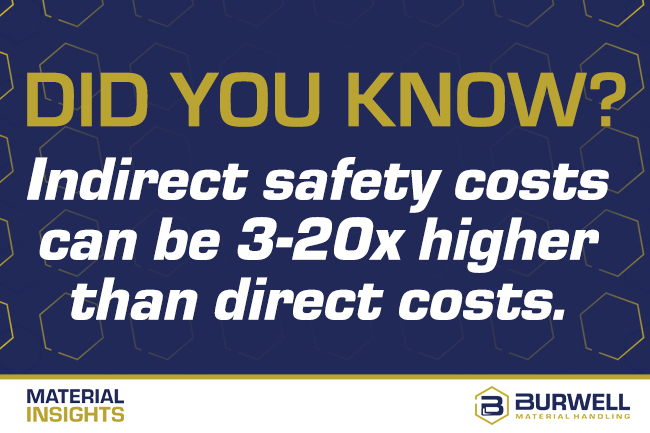
Gerhardt says what often gets overlooked are the indirect costs, which can be an astonishing three to 20 times higher than the visible direct costs. These include:
- Production downtime and lost throughput
- Recruitment and training of replacement workers
- Increased insurance premiums
- Reputational damage that hurts hiring and retention
When you run the math, preventing even one serious accident can offset the cost of automating high-risk tasks, let alone the safety benefits it can provide your operation.
How Automation Reduces Material Handling Risks
Automation helps minimize the challenges where people and machines intersect, which can be one of the riskiest points in most material handling operations.
- Pedestrian detection systems: AI-powered tools can trigger warnings when a forklift is in close proximity to a person to help prevent collisions.
- Palletizing and depalletizing: Robots handle repetitive lifting, twisting, and stacking, cutting down on musculoskeletal injuries.
- Automated walkways and traffic controls: Dynamic projection systems and lasers can replace painted floor lines with adaptive, visible signals that reduce forklift-pedestrian accidents.
- Inventory automation: Forklift sensors or drones perform cycle counts, reducing human exposure to traffic-heavy aisles.
Each example eliminates or reduces repetitive, fatiguing, or collision-prone tasks, improving both safety and efficiency.
Building Buy-In for Material Handling Automation
Introducing automation often raises concerns about job loss. Gerhardt says the reality is different.
“What we’ve seen is more reassignment of roles than displacement,” he says. “Reliable employees move into monitoring or higher-value work instead of repetitive manual tasks.”
Leaders can strengthen buy-in by:
- Showing workers how automation eliminates the most fatiguing, injury-prone tasks.
- Emphasizing reassignment over replacement.
- Connecting safety automation to job longevity: Fewer injuries mean more years of healthy, productive work.
Best-Practice Checklist for Organizational Buy-In
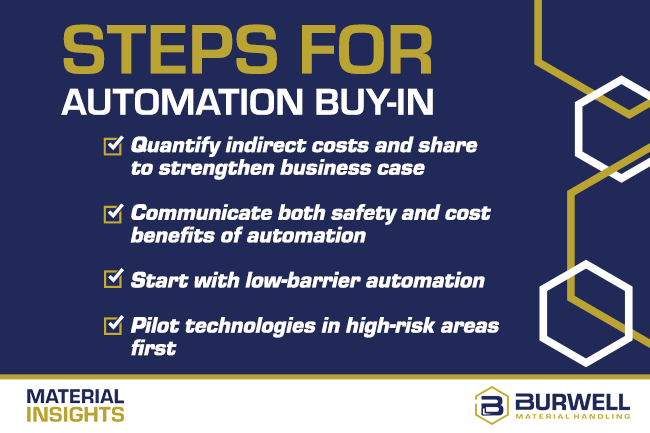
- Quantify and share indirect costs of injuries to build a stronger business case.
- Communicate both the safety and cost benefits, in addition to productivity gains.
- Start with low-barrier automation (like palletizing systems) before tackling end-to-end workflows.
- Pilot pedestrian detection or traffic control technology in high-risk areas.
The Payoff for Material Handling Automation
When automation is tied to safety, organizations can see returns beyond efficiency:
- Fewer injuries → lower direct and indirect costs.
- Safer environments → easier hiring and retention.
- More predictable operations → reduced downtime and improved margins.
“Safety and productivity go hand in hand,” Gerhardt says. “Keeping people safe and supported is the only way to retain them.”
FAQ: Material Handling Automation Safety & Cost Benefits
How does automation improve safety in material handling?
By reducing repetitive tasks, minimizing human-equipment interaction, and detecting hazards early.
How should safety-related costs factor into automation ROI?
Accidents carry indirect costs up to 20x higher than direct expenses. Preventing even one serious incident can offset an automation project.
Will automation replace workers?
Most organizations see role reassignment, not replacement. Workers often shift to monitoring or problem-solving roles.
What are good entry points for safety-focused automation?
Palletizing/depalletizing systems, pedestrian detection, and automated walkways are accessible starting points.