
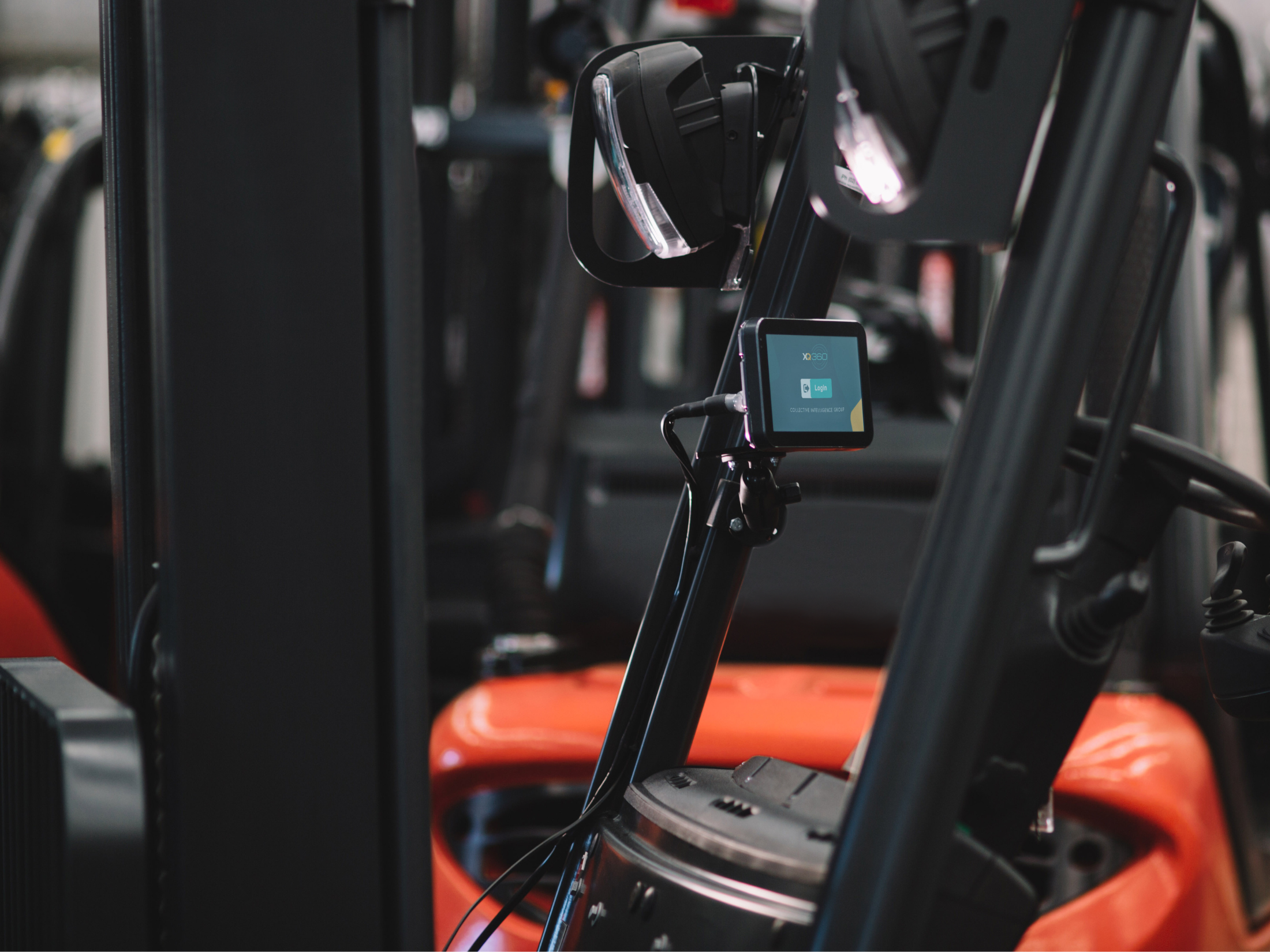
How to Reduce Forklift Fleet Risk: A Practical Safety Tech Stack
If you’re a safety manager or fleet manager, compliance usually comes down to two things:
- Do you have an active safety program that’s being followed by your crews?
- Can you investigate what happened when something goes wrong?
Telematics for your forklift fleet can help, but Jeff Buyck, CTO for Burwell Enterprises, says risk reduction should be built from a layered stack of technologies that provide evidence, controls, detection, and context.
Here’s how he recommends thinking about how to reduce forklift fleet risk:
Layer 1: Compliance you can prove
The pre-operation checklist, required by OSHA 1920.178, is the first area Buyck says fleets should address with technology.
“If you’re not doing a pre-operation checklist and you have an incident, now you’re on the hook,” he says.
Telematics solutions can provide digital records, timestamps, and exception tracking when something goes wrong.
For fleets, this adds a layer of defensibility, by documenting proof that your pre-operation checklist program exists and is being followed.
Layer 2: Prevent incidents with enforceable controls
Risk reduction is not only about records, but it’s also about preventing incidents in the first place.
This starts by making sure only qualified operators are accessing your units, Buyck says. Untrained operators can cause a lot of damage and harm; telematics with access control can limit and prevent that.
“The system can only allow certified drivers to operate that specific machine type,” he says.
Speed policy is another common internal conflict, Buyck says. Your safety team wants your operators to drive their forklifts slowly, while your operations team wants the highest productivity possible.
“The health and safety manager says 3 miles an hour should be the max, meanwhile your operations manager says you are killing my productivity,” Buyck says.
Dynamic speed control technology can help keep your entire operation happy, he says.
“When we walk in and say that we can do dynamic zoning throughout the facility, they both smile,” Buyck says. “This technology creates a happy medium.”
Dynamic zoning lets you slow trucks only in high-risk areas — intersections, pedestrian zones, docks — without forcing a blanket slowdown everywhere.
Layer 3: Reduce blind risk and add context
Other technologies beyond telematics can add protection for your fleet and teams.
“That’s where we start tying in cameras,” Buyck says. “This allows fleets to reference back and pull the video off the truck.”
Camera technologies reduce ambiguity after events, speed investigations, and support coaching with context instead of assumptions.
When it comes to pedestrian detection, there are two main solutions: wearables or AI-driven camera technologies.
“You have ultra-wideband sensors, like little pagers that you wear or pedestrian AI cameras,” Buyck says.
While there are distinct benefits, there are operational trade-offs with wearables, Buyck acknowledges.
“With wearables, you need to make sure they’re charged all the time and you need to trust that people are going to wear them,” he says.
AI-powered pedestrian detection can offer compelling advantages for busy, congested operations.
“The camera is using artificial intelligence and all it needs to detect is 6 inches of a person, and it will alert the operator,” Buyck says. “We’ve seen it detect pedestrians through racking and it also gives a stadium view and can detect multiple people simultaneously.”
This layer matters most in mixed pedestrian/forklift areas where visibility, blind corners, and congestion make near-misses hard to prevent with policy alone.
Layer 4: Add location intelligence to improve enforcement
Real-time location services (RTLS) isn’t just about knowing where your trucks are at any given time.
Buyck says it’s also about control and accountability to help monitor and mitigate department conflicts, utilization, and risky behavior patterns.
“For example, Department A says Department B always comes and steals our trucks and uses them all day,” he says.
RLTS solutions show the fleet manager where the units are spending most of their time.
“You can’t manage what you cannot measure,” Buyck says. “If you don’t know where everything’s at, that’s a challenge.”
RTLS helps you see where risk and waste cluster by zone and department, and whether your controls are working where it matters.
Where to start to reduce forklift fleet risk
It could be easy to be overwhelmed by outcomes you want to control and the technologies that allow you to do that. Buyck recommends starting simply.
“The starting point I say is the pre-op checklist — we start there with everybody,” he says. “If they’re doing that, then we start talking about speed limitation. If they’re doing that, then we start talking about pedestrian detection.”
If your goal is fewer incidents and better defensibility, and need help building a layered program, connect with an expert from the Burwell Connect & Protect team to get started.