
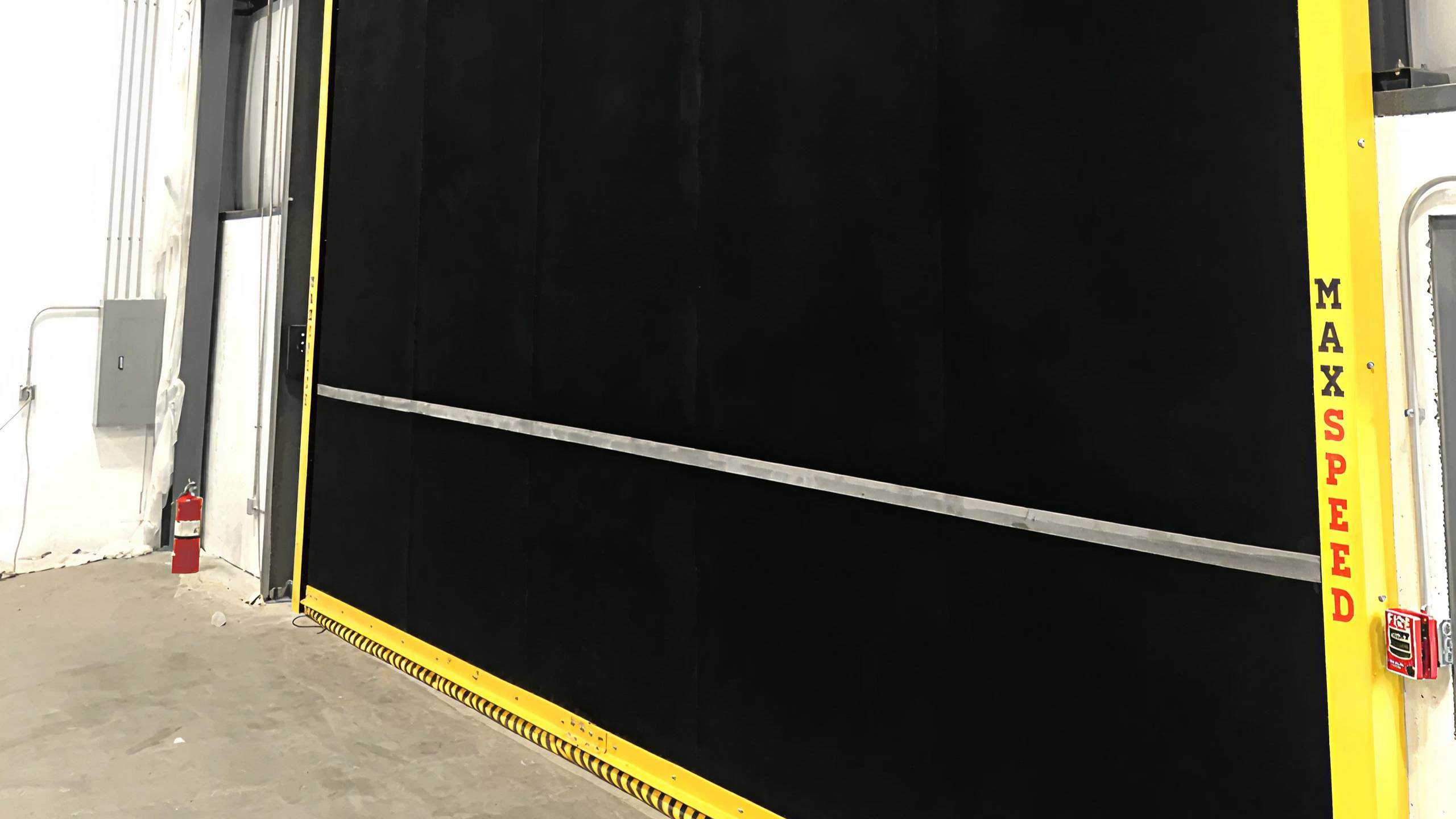
Rubber vs. Steel Doors: How to Choose for Your Facility
Adapted with permission from C.H.I
Overhead doors take daily abuse, between forklift and equipment bumps, weather elements, and thousands of operation cycles.
That’s why picking the right door for your facility is so important. Choose wrong, and you could end up paying for additional downtime, unexpected repairs, and energy loss. But pick correctly, and you’ll keep bays flowing and costs down.
“In busy bays, you need doors that last,” says Tom Racer, industrial products sales representative for the Engineered Solutions team at Burwell Material Handling. “But when choosing the right model for you and your business, you have to take into account other factors too, such as safety and energy savings.”
This guide explores two of the top models of overheard doors — rubber and steel — and dives into the benefits and differences so you can make the right decision.
What’s the Difference Between Rubber and Steel Doors?
While rubber and steel doors are both effective, they have a number of differences.
Steel Doors
Steel doors — either rolling or sectional style — use rigid slats/panels with counterbalance springs, hinges, rollers, and pulleys. They’re most common and cost-effective for lower-cycle, protected locations.
Rubber Doors
Rubber doors tend to use flexible curtains. Maintenance costs are lower and energy efficiency is higher due to rubber being a natural insulator. They’re designed to break away/reset after a collision, which is ideal for high-traffic, impact-prone openings.
One of the largest differences between rubber and steel doors is the use of springs. Rubber doors don’t use springs, making them easier to maintain. Springs have an average life of 10,000 cycles, with a cycle being when the door opens and closes. For example, if a door is used 25 times a day for a year, by the end of the year, the springs are used 9,100 times.
Without pulleys, springs, hinges, or rollers to worry about, the simplicity of rubber doors is safer with minimal maintenance.
How Do Safety and Reliability Compare?
Like we mentioned earlier, rubber overhead doors often remove counterbalance springs (a frequent failure point) and rely on impactable curtains and inertia/safety brakes for fault protection. After a bump, returning to service is typically minutes, not hours.
Steel doors are reliable with disciplined preventative maintenance, but impacts can commonly bend slats and misalign tracks, driving longer outages and repairs.
Not only is reliability important, but speed as well. Longer open times dump conditioned air. High‑speed rubber door options reduce air exchange and improve dock rhythm, especially at freezer/cooler or conditioned spaces.
“The operation of the overhead doors for your warehouse, distribution center, or manufacturing facility can really impact your workflow and costs,” Racer says. “You don’t want them slowing down your team, driving up costs, or affecting energy usage.”
Which Door Fits Your Facility?
Use these questions to match the right door to your facility:
- How many cycles per day does your door run during peak times? Consider the earlier mentioned spring ratings vs. expected traffic.
- How frequent are the impacts at this opening, and how fast must it recover?
- Is temperature control critical here (freezer/cooler/HVAC zones)?
- What does a three- to five-year TCO look like (capex + energy + repairs + downtime)?
“If you’re constantly repairing bent slats and guides, your current door may not be matched to the work at hand,” Racer says. “Ask yourself what’s best for your and your bottom line and make changes accordingly.”
FAQ: Rubber vs. Steel Doors
Are rubber doors always better than steel doors?
No. Rubber can shine in high‑traffic or impact-prone bays and temperature‑controlled zones. Steel fits better in lower‑cycle, more protected openings.
Do rubber doors really auto‑reset after a hit?
Many models are designed to break away and reset quickly. You can look into this more using the door’s warranty.
How often do steel door springs need replacement?
Standard springs are commonly ~10,000 cycles unless upgraded. High‑traffic bays reach that limit quickly. Plan ahead with preventative maintenance and spare parts.
Will a faster door cut energy cost?
Often, yes. Shorter open times reduce air exchange, which lowers HVAC load.
Next Step
Not sure which door belongs at each opening in your facility? Contact our team today.