
Forklift Fork and Chain Inspections: What Pre-Shift Walkarounds Can Miss
Pre-shift walkarounds for your forklifts absolutely matter.
They are designed for operators and managers to catch obvious issues before they become incidents, such as visible damage, leaks, missing hardware, or other unsafe conditions.
But when it comes to forklift fork and chain inspections, the most dangerous wear isn’t always visible to the average operator.
“Most operators are not going to be able to just look at these things and determine whether they’re at a catastrophic failure point,” says Terry Akers, forklift technical communicator for Burwell Material Handling.
That’s the gap. Walkarounds are primarily visual. Catastrophic wear is often tolerance-based and measurement-driven, best handled by a qualified service technician trained in identifying the wear thresholds that trigger replacement before failure occurs.
What forklift walkarounds are designed to do:
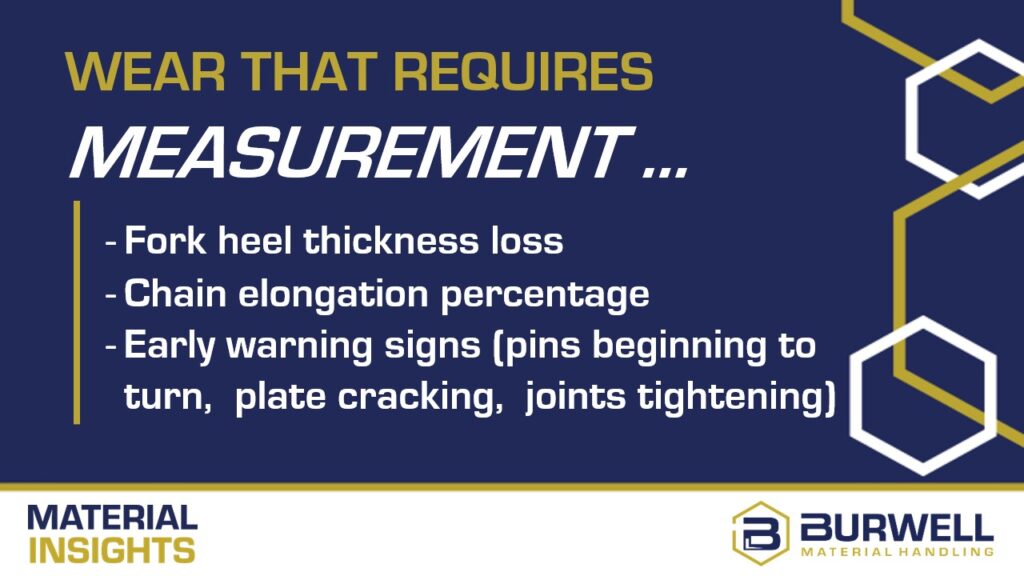
A daily check is still the right first and necessary line of defense. Before every shift, operators should look for:
- Obvious fork damage (bends, cracks, deformation)
- Chain and mast red flags (missing hardware, severe corrosion, abnormal slack)
- Hydraulic issues near the mast (leaks, abrasion, wet spots)
- Anything that changes how the truck operates during lifting and lowering (jerky motion, unusual noise)
When something looks off, it’s imperative that operators note it and report it to the proper authority.
“Bring that to the manager’s attention immediately and request that truck be tagged out,” says Tony Jennings, technical training manager at Burwell Material Handling. “You shouldn’t be using it.”
What forklift walkarounds often miss for forks and chains:
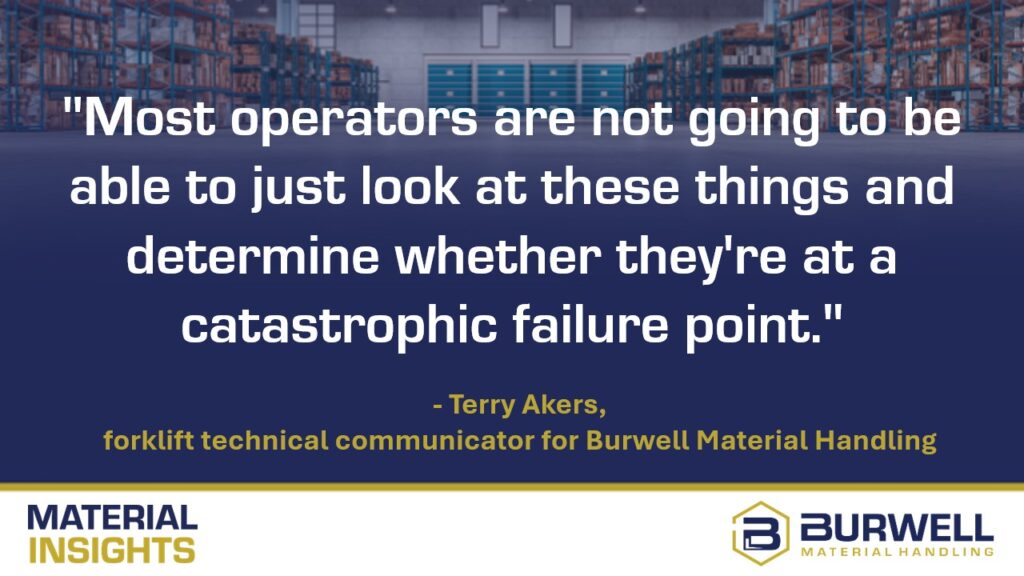
The most meaningful wear on forks and chains often requires measurement:
- Fork heel thickness loss (a safety threshold, not a vibe)
- Chain elongation percentage
- Early warning signs like pins beginning to turn, small plate cracking, or joints tightening
That’s why Akers says trained service technicians should be regularly inspecting your forklifts with the proper equipment.
“We have the tools to be able to do that factually,” Akers says.
He says it’s not complicated when done correctly.
“It’s a very easy process with the proper tooling,” he says.
A two-pronged approach for your forklift fork and chain inspections
This is the simplest way to close the gap between pre-shift walkarounds and fork and chain failures without overcomplicating operations.
1) Daily operator check (visual + escalation)
- Catch obvious defects
- Report immediately
- Tag out when there’s any suspicion of fatigue/failure
2) Scheduled, measurement-based inspection
- Use fork gauges and chain gauges for repeatable thresholds
- Tie checks to service touchpoints (PMs, repairs, scheduled audits)
“Your service technician should be checking those every time we make contact with that piece of equipment,” Jennings says.
Why looks can be deceiving with forklift walkarounds
Two trucks can be the same age and have totally different wear profiles based on where they run.
“Dust and debris contributes to a ton of chain wear,” Akers says. “If you get dust in the chains, it acts as sandpaper in between the links, and it definitely increases the need for inspections to monitor their wear.”
The frequency of forklift fork and chain inspections depends on the environment. Moisture, corrosives, abrasive contamination, shock loads all increase inspection needs.
Next step
Forklift owners cannot rely on walkarounds alone to prevent catastrophic failure of their forks and chains. Contact the Burwell Material Handling team of experts today.