What ‘Rental Ready’ Should Mean Before Equipment Reaches Your Site
Most rental needs come with a sense of urgency: Either a forklift has gone down or a job scope changes.
By the time the rental call happens, the work is usually already waiting.
That urgency is exactly why “rental ready” should mean more than equipment merely being available.
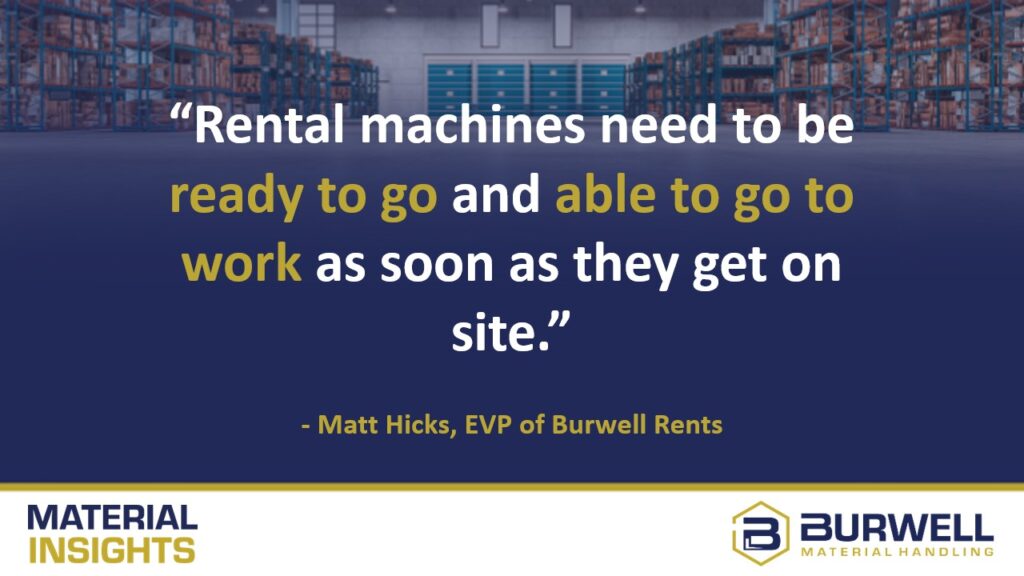
“Most rental calls come in because the customer already has a problem to solve, and time is of the essence,” says Matt Hicks, EVP of Burwell Rents. “That’s why rental machines need to be ready to go and able to go to work as soon as they get on site.”
Here’s what customers should expect “rental-ready” equipment to mean.
Available and ready are not the same thing
When the need is urgent, availability matters. But availability alone does not guarantee the equipment will solve the problem.
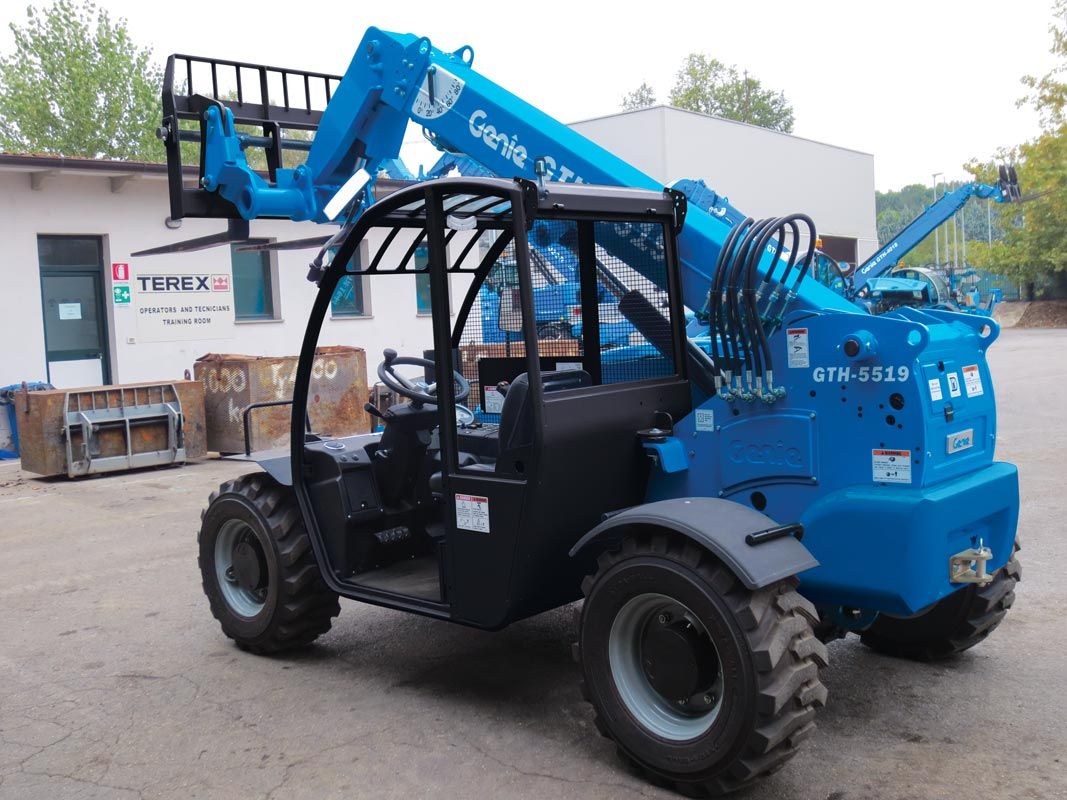
A rental unit may be available but still create delays if it arrives with a dead battery, unperformed maintenance work, unreadable safety decals, the wrong attachment, the wrong tire type, or a capacity that does not match the work.
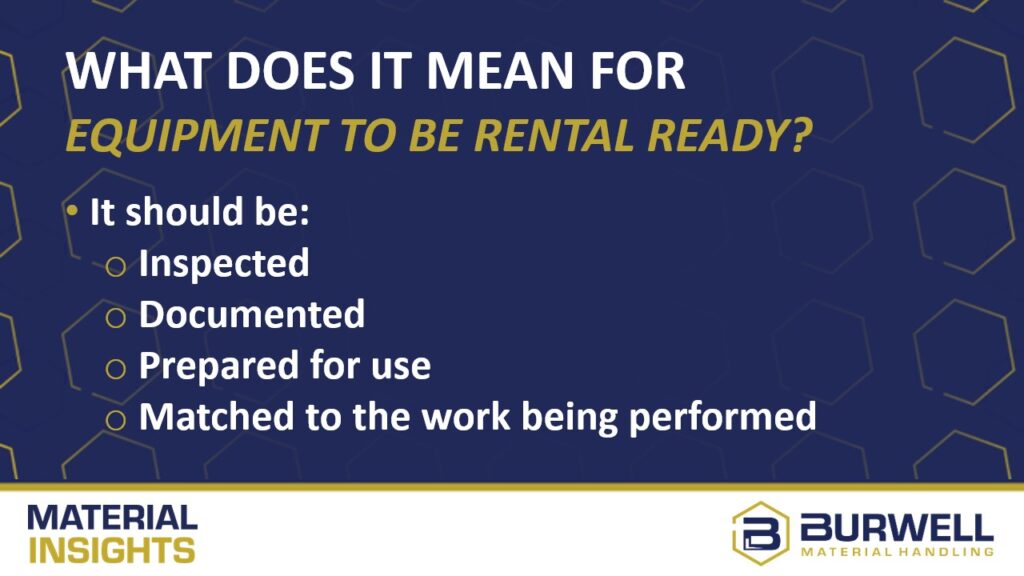
Rental-ready equipment should be inspected, documented, prepared for use, and matched as closely as possible to the work being performed.
“When a customer calls for a rental, they’re usually trying to keep work moving,” Hicks says. “They need the machine to help, not add one more thing to deal with.”
What should be checked before a rental goes out?
Customers do not need to know every internal inspection step a rental team follows. But they should know what “ready” generally includes.
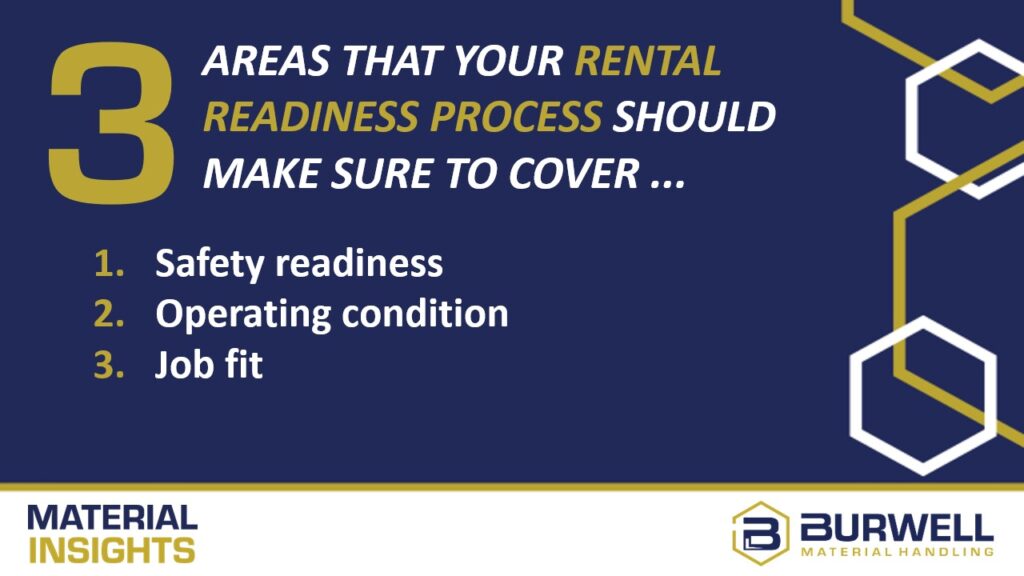
A strong rental readiness process should cover three areas: safety readiness, operating condition, and job fit.
- Safety readiness includes the basics that help the customer put the machine to work with confidence. That may include readable safety decals, the correct operator and safety manuals, working alarms, seat belts where applicable, current inspection status for regulated equipment, and visible damage review.
- Operating condition is about whether the machine is prepared to function when it arrives. That means checking for leaks, tire condition, controls, battery connections or fuel level, hydraulic components, engine items where applicable, and any obvious damage or shortage before delivery.
- Job fit is about whether the machine matches what the customer actually needs to do. Capacity, lift height, working height, fork length, tire type, power source, attachments, indoor or outdoor use, surface conditions, and delivery access all affect whether a rental is truly ready for the job.
“Rental readiness has to both cover the condition of the machine and match the work it’s going into,” Hicks says. “A clean, inspected machine still has to be the right machine for that customer’s site.”
That is where a short conversation up front can prevent problems later. If the rental is a forklift, the rental team should understand what is being moved, how heavy it is, how high it needs to go, where the truck will operate, what surfaces it will run on, and whether attachments are needed.
Check-in matters as much as check-out
Rental readiness actually starts when the last rental comes back, Hicks says.
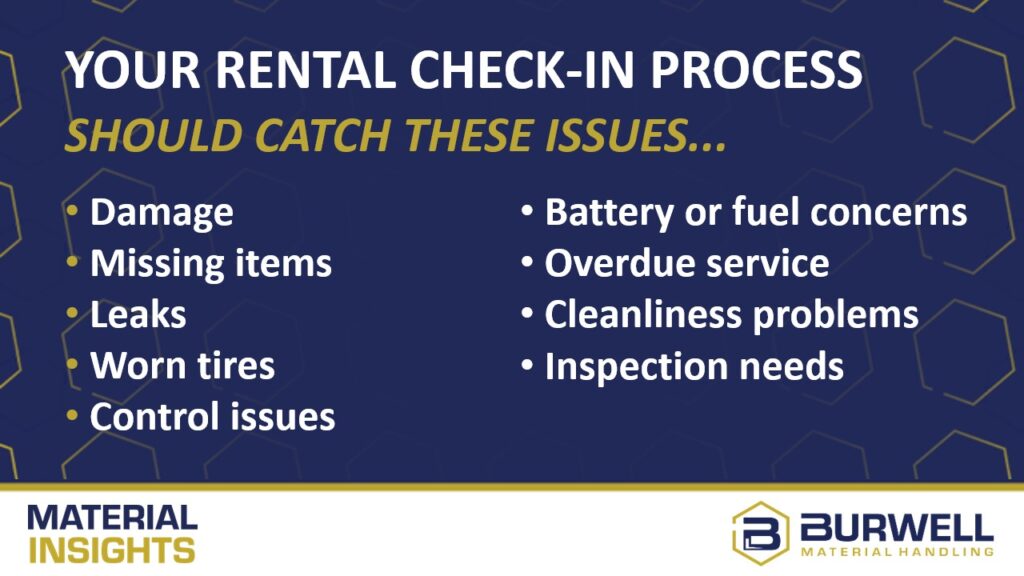
When equipment returns from a rental, it should be reviewed before it is sent back out. That check-in process helps catch issues the next customer should not inherit: damage, missing items, leaks, worn tires, control issues, battery or fuel concerns, overdue service, cleanliness problems, or inspection needs.
“What happens when a machine comes back matters for the next customer,” Hicks says. “If there’s an issue, you want to catch it before the next person is counting on that machine.”
This is one reason documentation matters. Hour meter readings, equipment numbers, model and serial information, visible damage notes, inspection dates, attachments, and condition checks help create a clearer record of what came in, what went out, and what may need attention before the next rental.
For the customer, the result should be simple: fewer surprises when the equipment arrives.
The right rental should fit the work
Speed matters in rentals. But speed cannot be the only goal.
If a machine shows up quickly but cannot safely or efficiently do the job, the customer may lose time anyway. Another rental may need to be dispatched. In some cases, the wrong machine can introduce safety concerns.
“Fast matters, especially when the customer is in a bind,” Hicks says. “But the machine still has to fit the work. A rental that’s close but not right can slow everybody down.”
That fit depends on the application.
A warehouse may need a forklift that can work in tight aisles and fit through doorways. A construction or maintenance crew may need the correct working height, platform type, reach, and ground condition match.
What customers should ask when the rental need is urgent
When the need is urgent, you may not have time for a long evaluation. But a few practical questions can make the rental process smoother.
- Ask whether the machine has been inspected since its last rental.
- Confirm whether it is fueled or charged.
- Ask whether the manuals, decals, and safety items are in place.
- Confirm the required attachments, fork length, tire type, capacity, lift height, or working height.
- Ask whether inspections are current.
- Confirm who to call if something does not look right when the machine arrives.
Most importantly, be ready to describe the work.
- What are you moving?
- Where will the equipment operate?
- Is it indoors, outdoors, or both?
- What surface will it travel on?
- How high does it need to lift or reach?
- What time does it need to be on site?
- Who will receive it?
“A customer shouldn’t have to guess what shape the machine is in,” Hicks says. “And the rental team should be asking enough questions to understand what the machine needs to do.”
Rental ready comes down to confidence
When rental equipment is needed quickly, the last thing you need is a complicated process. You need the right machine to show up ready to work.
That confidence comes from preparation before the call, inspection before delivery, documentation through check-in and check-out, and a rental team that asks the right questions before sending equipment to the site.
“Everybody wants to say their equipment is ready,” Hicks says. “The difference is having the process to back that up.”
Next step
When you need rental equipment quickly, the right details help the rental team match the machine to the work. Contact Burwell Rents with what you’re moving, where the machine will operate, what height or capacity you need, and when the equipment needs to be on site.